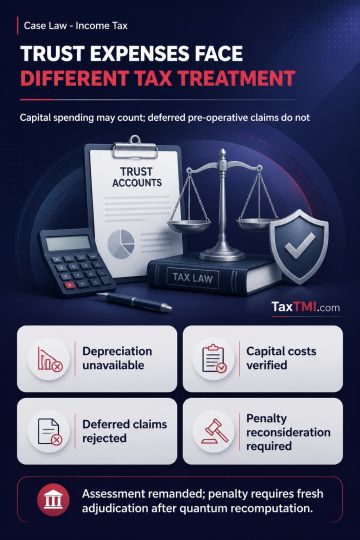
Charitable trust income application permits verified capital expenditure but rejects deferred pre-operative claims and requires reconsideration of con...
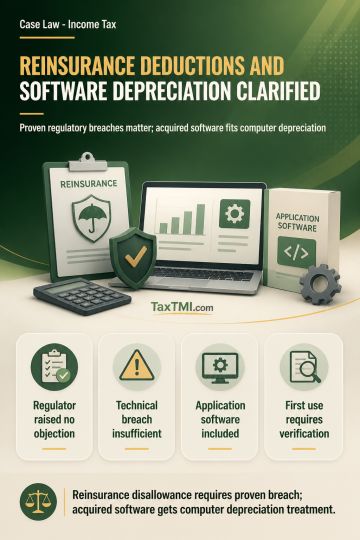
Reinsurance premium deductions require established regulatory breaches, while independently acquired software qualifies within the computer depreciati...
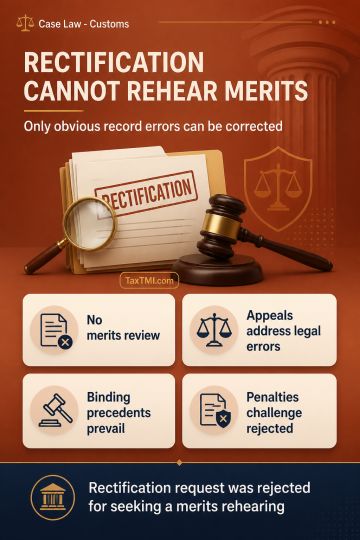
Rectification of mistake remains limited to self-evident record errors, preventing merits review through miscellaneous applications and preserving fin...
Tender creditworthiness conditions may extend to de facto Promoter Directors, with post-participation challenges generally barred absent arbitrariness...
Corporate representation in PMLA summons proceedings permitted through an authorised signatory, subject to directors' continuing cooperation and atten...
HC quashed provisional attachment order under Section 83 of CGST Act, finding it legally deficient on multiple grounds. The order lacked tangible material justifying attachment necessity, failed to disclose substantive reasons beyond mere statutory reproduction, and showed no application of mind regarding jurisdictional elements. While Section 83 permits immediate action without pre-decisional hearing to protect revenue interests, it does not dispense with the requirement to provide reasoning. The Court rejected respondent's technical arguments about form limitations, emphasizing that fundamental principles of reasoned decision-making cannot be sacrificed for expediency. The attachment was invalidated for failing to demonstrate necessity through proper reasoning and for not considering less restrictive alternatives.
HC quashed provisional attachment order under Section 83 of CGST Act, finding it legally deficient on multiple grounds. The order lacked tangible material justifying attachment necessity, failed to disclose substantive reasons beyond mere statutory reproduction, and showed no application of mind regarding jurisdictional elements. While Section 83 permits immediate action without pre-decisional hearing to protect revenue interests, it does not dispense with the requirement to provide reasoning. The Court rejected respondent's technical arguments about form limitations, emphasizing that fundamental principles of reasoned decision-making cannot be sacrificed for expediency. The attachment was invalidated for failing to demonstrate necessity through proper reasoning and for not considering less restrictive alternatives.
Note: It is a system-generated summary and is for quick reference only.
 TaxTMI
 of 4805














 Join Channel


 TaxTMI
