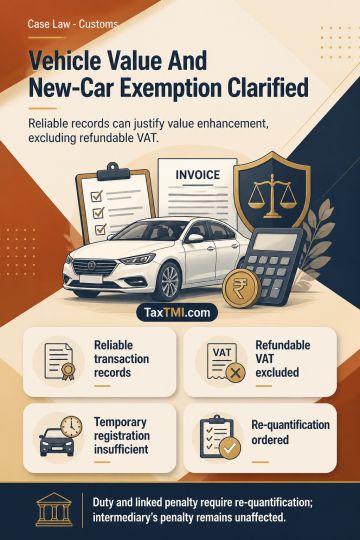
Transaction value rejection requires reliable corroboration; refundable VAT is excluded and temporary registration does not defeat new-vehicle exempti...
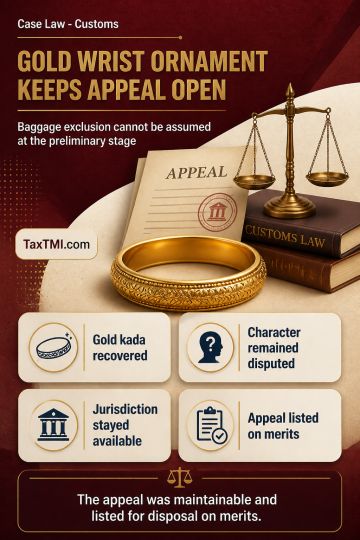
Appellate jurisdiction remains available where a wrist-worn gold ornament cannot conclusively be characterised as imported baggage at the preliminary ...
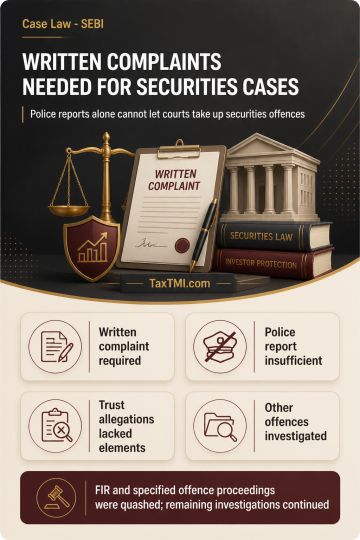
Written complaint requirement bars cognizance on police reports for securities offences, while unsupported breach of trust and cheating allegations fa...
Risk-based postal import clearance standardises electronic assessment, document requests, duty realisation and delivery controls at Foreign Post Offic...
Page of 4786
Press 'Enter' after typing page number.
61 to 80 of 95715 Results
❮
❯
❯❯
0 / 200
Expand Note
Add to Folder
No Folders have been created
+
Are you sure you want to delete "My most important" ?
HC held that both appellants must be given opportunity to cross-examine witness Mr. B under Section 138(B) of Customs Act, addressing discriminatory treatment by CESTAT which upheld penalties against one appellant while adopting opposite approach for similarly situated co-appellant. While cross-examination is not an unfettered right in all customs proceedings, principles of natural justice require it when witness statements form basis of penalties under Sections 112 and 114A. Court directed single-day cross-examination with possibility of one extension, after which authority shall adjudicate matter per law. Court emphasized that information from statutory authorities doesn't automatically warrant cross-examination but circumstances of this case necessitated equal treatment of both appellants regarding examination rights.
HC held that both appellants must be given opportunity to cross-examine witness Mr. B under Section 138(B) of Customs Act, addressing discriminatory treatment by CESTAT which upheld penalties against one appellant while adopting opposite approach for similarly situated co-appellant. While cross-examination is not an unfettered right in all customs proceedings, principles of natural justice require it when witness statements form basis of penalties under Sections 112 and 114A. Court directed single-day cross-examination with possibility of one extension, after which authority shall adjudicate matter per law. Court emphasized that information from statutory authorities doesn't automatically warrant cross-examination but circumstances of this case necessitated equal treatment of both appellants regarding examination rights.
Note: It is a system-generated summary and is for quick reference only.
 TaxTMI
 of 4786



 Join Channel


 TaxTMI