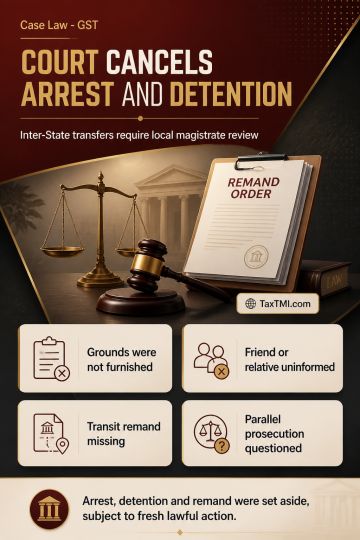
Arrest safeguards and transit remand requirements invalidated detention following inter-State transfer without communicated grounds or magistrate auth...
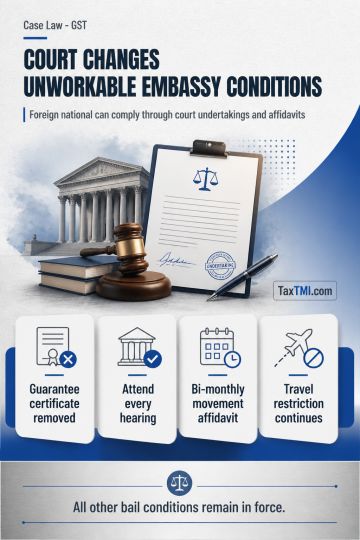
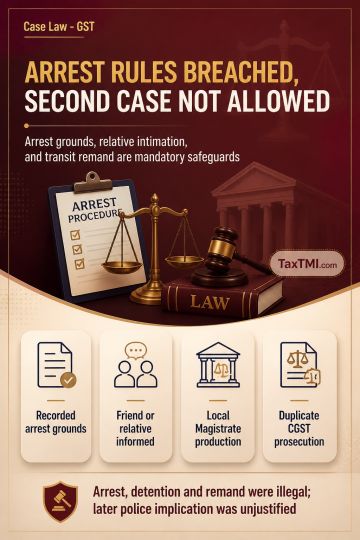
Arrest safeguards require disclosed grounds, relative intimation and transit remand, while duplicate prosecution under the CGST framework is unsustain...
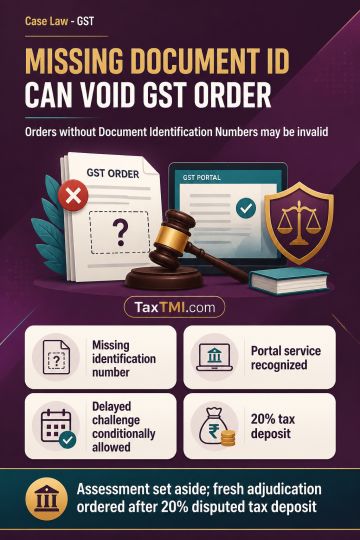
Document Identification Number defects can invalidate GST assessments, with delayed challenges entertained conditionally where patent irregularities e...
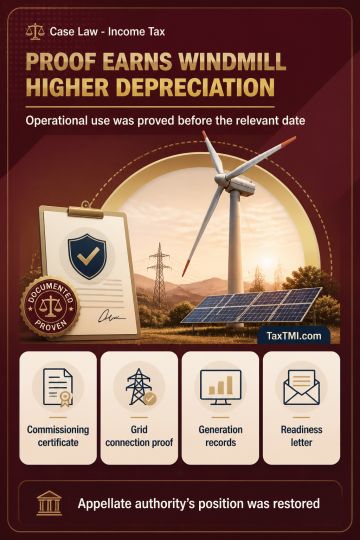
Windmill commissioning evidence supported higher depreciation where grid connection and electricity generation proved operational use before the relev...
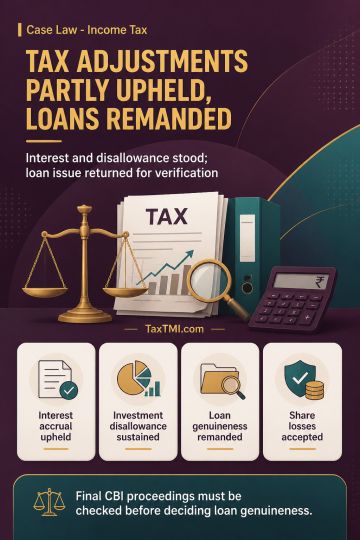
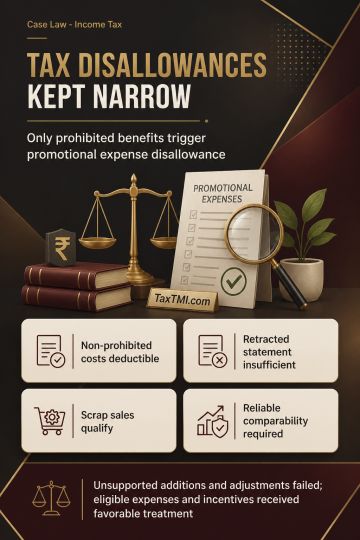
Pharmaceutical promotion and transfer-pricing comparability principles limited disallowances, while uncorroborated search allegations and unsupported ...
HC held that both appellants must be given opportunity to cross-examine witness Mr. B under Section 138(B) of Customs Act, addressing discriminatory treatment by CESTAT which upheld penalties against one appellant while adopting opposite approach for similarly situated co-appellant. While cross-examination is not an unfettered right in all customs proceedings, principles of natural justice require it when witness statements form basis of penalties under Sections 112 and 114A. Court directed single-day cross-examination with possibility of one extension, after which authority shall adjudicate matter per law. Court emphasized that information from statutory authorities doesn't automatically warrant cross-examination but circumstances of this case necessitated equal treatment of both appellants regarding examination rights.
HC held that both appellants must be given opportunity to cross-examine witness Mr. B under Section 138(B) of Customs Act, addressing discriminatory treatment by CESTAT which upheld penalties against one appellant while adopting opposite approach for similarly situated co-appellant. While cross-examination is not an unfettered right in all customs proceedings, principles of natural justice require it when witness statements form basis of penalties under Sections 112 and 114A. Court directed single-day cross-examination with possibility of one extension, after which authority shall adjudicate matter per law. Court emphasized that information from statutory authorities doesn't automatically warrant cross-examination but circumstances of this case necessitated equal treatment of both appellants regarding examination rights.
Note: It is a system-generated summary and is for quick reference only.
 TaxTMI
 of 4798




 Join Channel


 TaxTMI