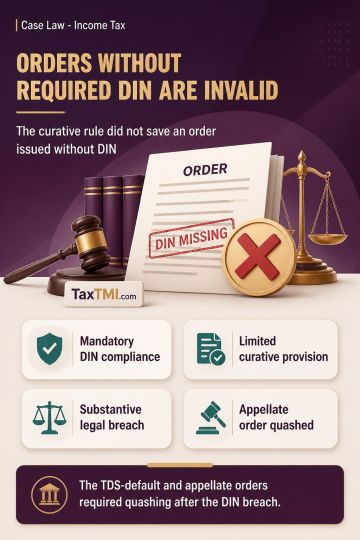
Document Identification Number compliance renders TDS-default orders invalid where mandatory DIN requirements are breached and curative provision does...
HC held that pre-show cause consultation was not mandatory in tax evasion cases and extended 5-year limitation period under Section 73(1) applied when proceedings involved allegations of fraud or suppression. The Court declined to examine whether fraud existed, ruling this was within the Appellate Authority's domain. While Section 74(1) of CGST Act requires specific evidence of fraud or willful misstatement for invocation, the authority's reasonable belief formation was valid despite petitioner's non-response. The writ petition was dismissed as premature given available statutory appeal remedies. The Court emphasized that "where possible" timeframes for tax determination were directory, not mandatory, allowing proceedings to continue beyond prescribed periods.
HC held that pre-show cause consultation was not mandatory in tax evasion cases and extended 5-year limitation period under Section 73(1) applied when proceedings involved allegations of fraud or suppression. The Court declined to examine whether fraud existed, ruling this was within the Appellate Authority's domain. While Section 74(1) of CGST Act requires specific evidence of fraud or willful misstatement for invocation, the authority's reasonable belief formation was valid despite petitioner's non-response. The writ petition was dismissed as premature given available statutory appeal remedies. The Court emphasized that "where possible" timeframes for tax determination were directory, not mandatory, allowing proceedings to continue beyond prescribed periods.
Note: It is a system-generated summary and is for quick reference only.
 TaxTMI
  TaxTMI
 of 4918