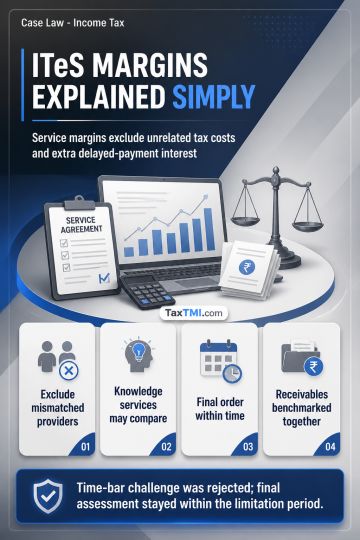
Transfer-pricing treatment of ITeS margins excludes pass-through tax recoveries and separate delayed-receivables interest after working-capital adjust...
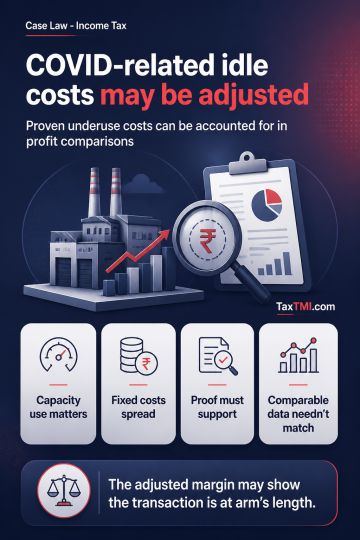
Capacity-utilisation adjustments under TNMM can neutralise substantiated COVID-related idle costs where underutilisation materially affects profitabil...
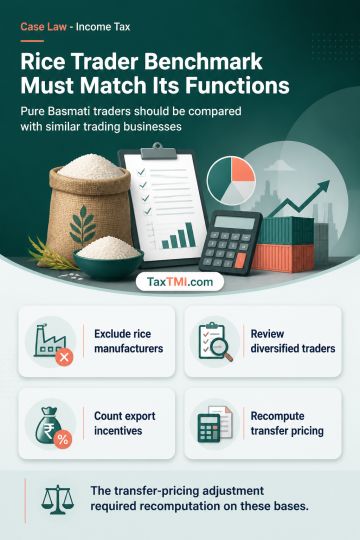
TNMM functional comparability requires excluding rice manufacturers from a pure Basmati rice trader's benchmark and recognising operating export recei...
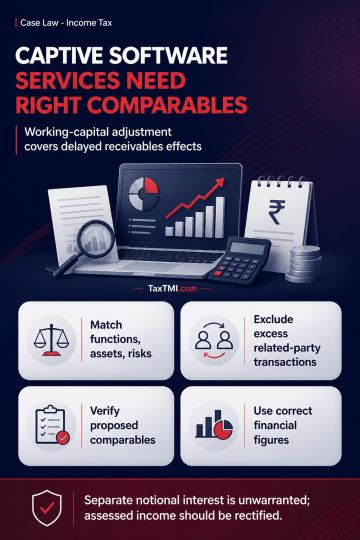
Working-capital adjustment subsumes delayed-receivable effects in TNMM benchmarking of captive software-development services, avoiding separate notion...
Transfer-pricing comparability requires exclusion of financially illogical super-profit comparables and correction of unsupported annual-report and ma...
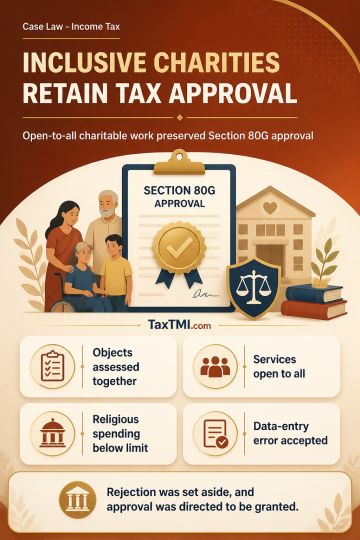
Charitable character assessment preserves Section 80G approval despite inclusive spiritual teachings and incidental religious expenditure within the s...
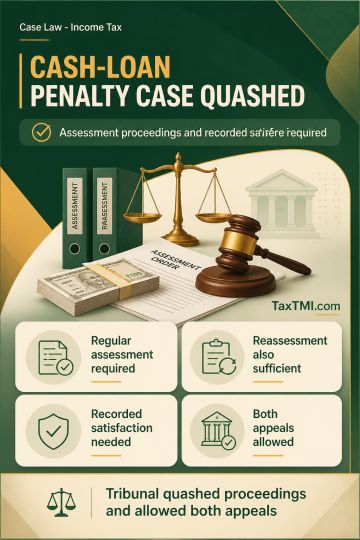
Penalty proceedings for cash-loan acceptance require assessment proceedings and recorded Assessing Officer satisfaction; absent these, the proceedings...
Page of 4828
Press 'Enter' after typing page number.
161 to 180 of 96556 Results
❮
❯
❯❯
0 / 200
Expand Note
Add to Folder
No Folders have been created
+
Are you sure you want to delete "My most important" ?
SEBI has established a regulatory framework for retail investor participation in algorithmic trading, effective August 1, 2025. The framework mandates brokers to act as principals while algo providers serve as agents. All algo orders via APIs must carry unique Exchange-provided identifiers. Retail investors' self-developed algos require Exchange registration if exceeding specified order thresholds. The directive categorizes algos into White Box (disclosed logic) and Black Box (undisclosed logic) types, with additional Research Analyst registration requirements for Black Box providers. Brokers must implement two-factor authentication, OAuth-based security, and handle all algo-related grievances. Exchanges will supervise algo trading through comprehensive SOPs, surveillance mechanisms, and kill switch capabilities. Implementation standards will be formulated by April 1, 2025, through the Broker's Industry Standards Forum.
SEBI has established a regulatory framework for retail investor participation in algorithmic trading, effective August 1, 2025. The framework mandates brokers to act as principals while algo providers serve as agents. All algo orders via APIs must carry unique Exchange-provided identifiers. Retail investors' self-developed algos require Exchange registration if exceeding specified order thresholds. The directive categorizes algos into White Box (disclosed logic) and Black Box (undisclosed logic) types, with additional Research Analyst registration requirements for Black Box providers. Brokers must implement two-factor authentication, OAuth-based security, and handle all algo-related grievances. Exchanges will supervise algo trading through comprehensive SOPs, surveillance mechanisms, and kill switch capabilities. Implementation standards will be formulated by April 1, 2025, through the Broker's Industry Standards Forum.
Note: It is a system-generated summary and is for quick reference only.
 TaxTMI
  TaxTMI
 of 4828






 Join Channel