Service of notice and contractual debt acknowledgment preserved insolvency admission against a corporate guarantor despite limitation and natural just...
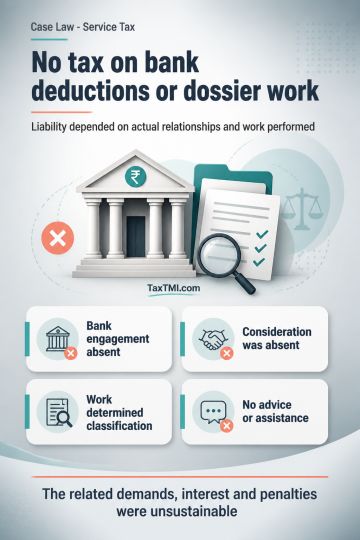
Original works exemption excludes standalone boulder transportation, leaving subcontracted railway-project transport services subject to service tax l...
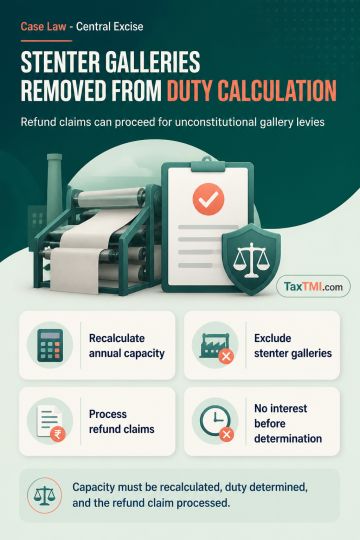
Annual production capacity determinations excluding stenter galleries support refunds for unconstitutional excise levies without an unjust-enrichment ...
Vicarious liability for cheque dishonour requires specific allegations of responsibility and cheque signatory; generic director allegations cannot sus...
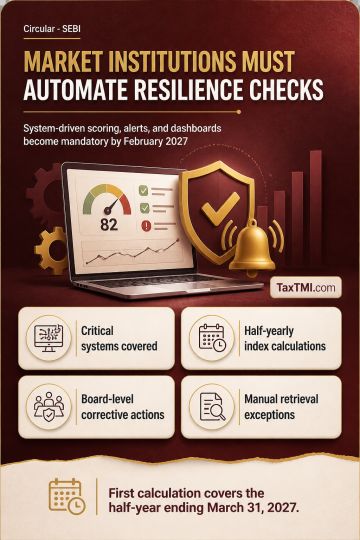
IT Resilience Index requires market infrastructure institutions to automate resilience scoring, early warnings, and continuous service-delivery monito...
The proposed new Income Tax Bill aims to replace the Income Tax Act 1961 with a modernized, simplified framework that maintains revenue neutrality. The legislation will streamline the current 298-section statute by eliminating obsolete provisions, removing redundant amendments, and simplifying legal language for enhanced comprehension. Key objectives include reducing litigation through clearer statutory interpretation, implementing technology-driven compliance mechanisms like pre-filled returns, and consolidating direct tax provisions in a more accessible format. The Bill, scheduled for Parliamentary introduction during the Budget session, will undergo Standing Committee review. While maintaining existing tax rates and structures, the reform focuses on procedural simplification rather than substantive tax policy changes, preserving the established direct tax framework while improving its administrative efficiency.
The proposed new Income Tax Bill aims to replace the Income Tax Act 1961 with a modernized, simplified framework that maintains revenue neutrality. The legislation will streamline the current 298-section statute by eliminating obsolete provisions, removing redundant amendments, and simplifying legal language for enhanced comprehension. Key objectives include reducing litigation through clearer statutory interpretation, implementing technology-driven compliance mechanisms like pre-filled returns, and consolidating direct tax provisions in a more accessible format. The Bill, scheduled for Parliamentary introduction during the Budget session, will undergo Standing Committee review. While maintaining existing tax rates and structures, the reform focuses on procedural simplification rather than substantive tax policy changes, preserving the established direct tax framework while improving its administrative efficiency.
Note: It is a system-generated summary and is for quick reference only.
 TaxTMI
  TaxTMI
 of 4828
















 Join Channel