Form 26AS evidence requires successor-entity accounting verification after business transfer, while invoice-supported related-party advertising expend...
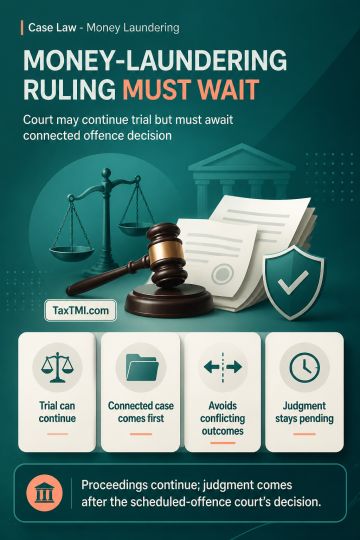
Money-laundering judgment timing requires awaiting the scheduled-offence decision despite continuation of the underlying trial where outcomes directly...
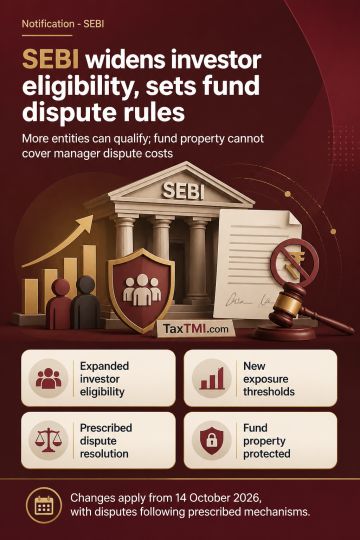
Accredited investor eligibility expands through securities-market exposure, while alternative investment fund disputes require prescribed resolution a...
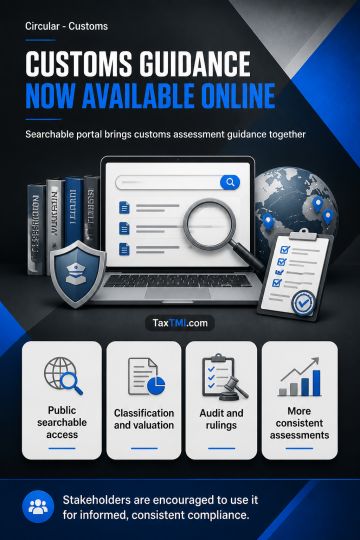
Customs Assessment Portal centralises classification and valuation guidance to support consistent, transparent and informed compliance across stakehol...
Page of 4918
Press 'Enter' after typing page number.
101 to 120 of 98359 Results
❮
❯
❯❯
0 / 200
Expand Note
Add to Folder
No Folders have been created
+
Are you sure you want to delete "My most important" ?
HC upheld deductions claimed under section 37 for license fee paid to use the goodwill and name "Remfry & Sagar." The court determined that payment for using goodwill cannot be viewed as illegal or prohibited by law. The arrangement linking consideration to firm revenue was merely a basis for computing goodwill usage fees, not a prohibited sharing of legal fees under Bar Council rules. The court emphasized that goodwill represents a legitimate transferable asset, and its monetization through license fees constitutes valid business expenditure. The primary purpose was to derive benefit from an established reputation in legal services, not to circumvent professional regulations or engage in tax avoidance. The expenditure was therefore allowable as a legitimate business deduction.
HC upheld deductions claimed under section 37 for license fee paid to use the goodwill and name "Remfry & Sagar." The court determined that payment for using goodwill cannot be viewed as illegal or prohibited by law. The arrangement linking consideration to firm revenue was merely a basis for computing goodwill usage fees, not a prohibited sharing of legal fees under Bar Council rules. The court emphasized that goodwill represents a legitimate transferable asset, and its monetization through license fees constitutes valid business expenditure. The primary purpose was to derive benefit from an established reputation in legal services, not to circumvent professional regulations or engage in tax avoidance. The expenditure was therefore allowable as a legitimate business deduction.
Note: It is a system-generated summary and is for quick reference only.
 TaxTMI
  TaxTMI
 of 4918