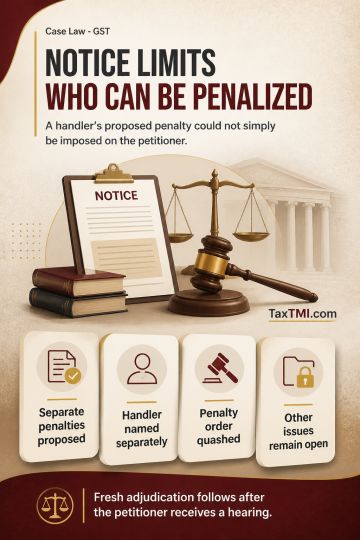
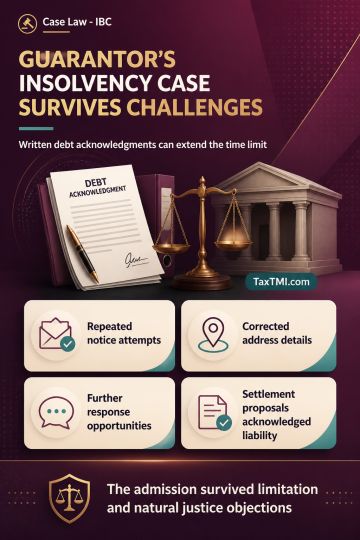
Service of notice and contractual debt acknowledgment preserved insolvency admission against a corporate guarantor despite limitation and natural just...
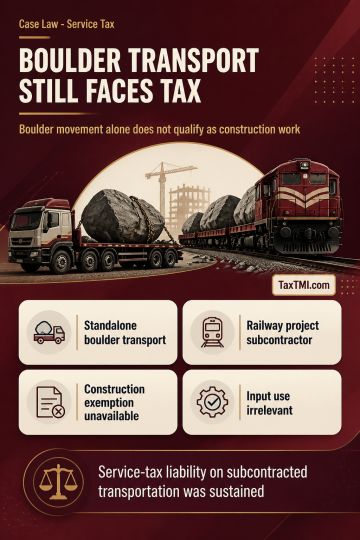
Original works exemption excludes standalone boulder transportation, leaving subcontracted railway-project transport services subject to service tax l...
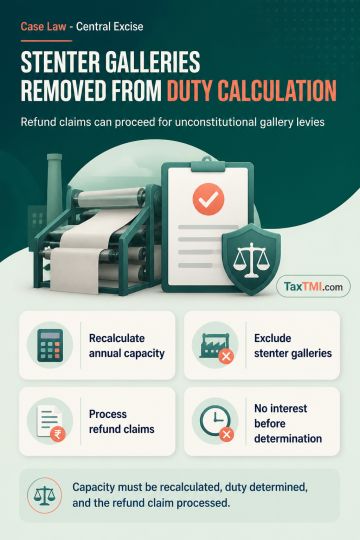
Annual production capacity determinations excluding stenter galleries support refunds for unconstitutional excise levies without an unjust-enrichment ...
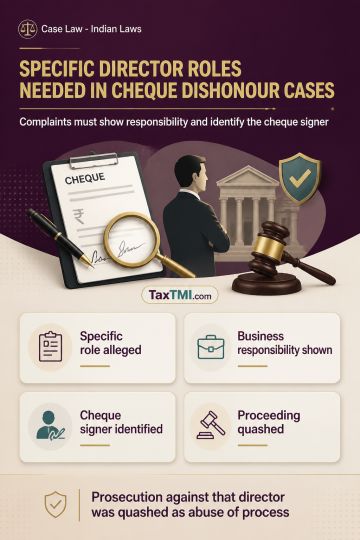
Vicarious liability for cheque dishonour requires specific allegations of responsibility and cheque signatory; generic director allegations cannot sus...
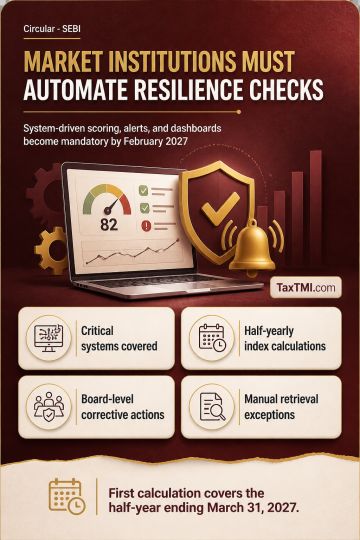
IT Resilience Index requires market infrastructure institutions to automate resilience scoring, early warnings, and continuous service-delivery monito...
HC upheld deductions claimed under section 37 for license fee paid to use the goodwill and name "Remfry & Sagar." The court determined that payment for using goodwill cannot be viewed as illegal or prohibited by law. The arrangement linking consideration to firm revenue was merely a basis for computing goodwill usage fees, not a prohibited sharing of legal fees under Bar Council rules. The court emphasized that goodwill represents a legitimate transferable asset, and its monetization through license fees constitutes valid business expenditure. The primary purpose was to derive benefit from an established reputation in legal services, not to circumvent professional regulations or engage in tax avoidance. The expenditure was therefore allowable as a legitimate business deduction.
HC upheld deductions claimed under section 37 for license fee paid to use the goodwill and name "Remfry & Sagar." The court determined that payment for using goodwill cannot be viewed as illegal or prohibited by law. The arrangement linking consideration to firm revenue was merely a basis for computing goodwill usage fees, not a prohibited sharing of legal fees under Bar Council rules. The court emphasized that goodwill represents a legitimate transferable asset, and its monetization through license fees constitutes valid business expenditure. The primary purpose was to derive benefit from an established reputation in legal services, not to circumvent professional regulations or engage in tax avoidance. The expenditure was therefore allowable as a legitimate business deduction.
Note: It is a system-generated summary and is for quick reference only.
 TaxTMI
  TaxTMI
 of 4828






 Join Channel