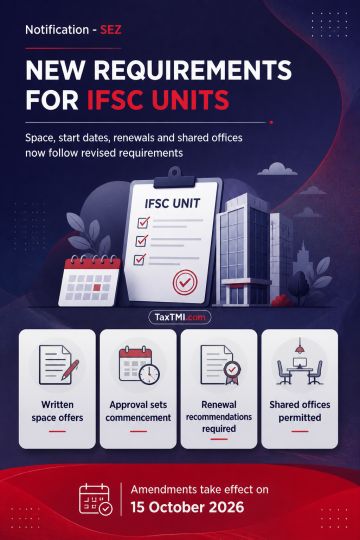
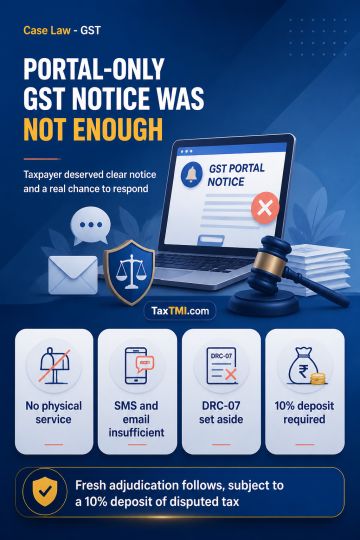
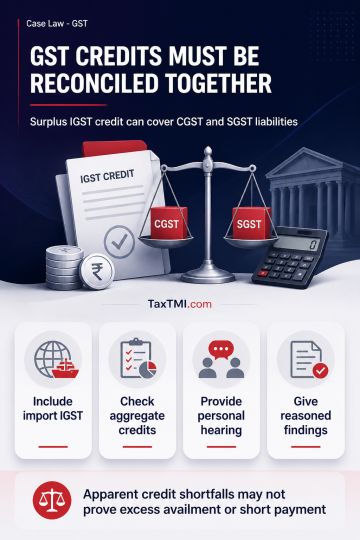
Accredited investor eligibility expands through securities-market exposure, while alternative investment fund disputes require prescribed resolution a...
Customs Assessment Portal centralises classification and valuation guidance to support consistent, transparent and informed compliance across stakehol...
ITAT ruled against establishing a dependent agent Permanent Establishment (PE) of foreign entity (Japan) through its Indian subsidiary under India-Japan DTAA Article 5. Indian subsidiary functioned solely as a communication channel between Japanese parent and Indian customers, without authority to conclude contracts or maintain inventory. AO's application of Rule 10 with Section 44BB to estimate 10% deemed profits was rejected. ITAT found tax authorities' conclusions were based on assumptions without examining agency agreement or conducting independent inquiry. Despite trading business continuity, mere existence of business flow insufficient to establish principal-agent relationship. Clear factual evidence demonstrated absence of PE, negating need for further verification of contractual relationship between entities as directed in previous years.
ITAT ruled against establishing a dependent agent Permanent Establishment (PE) of foreign entity (Japan) through its Indian subsidiary under India-Japan DTAA Article 5. Indian subsidiary functioned solely as a communication channel between Japanese parent and Indian customers, without authority to conclude contracts or maintain inventory. AO's application of Rule 10 with Section 44BB to estimate 10% deemed profits was rejected. ITAT found tax authorities' conclusions were based on assumptions without examining agency agreement or conducting independent inquiry. Despite trading business continuity, mere existence of business flow insufficient to establish principal-agent relationship. Clear factual evidence demonstrated absence of PE, negating need for further verification of contractual relationship between entities as directed in previous years.
Note: It is a system-generated summary and is for quick reference only.
 TaxTMI
  TaxTMI
 of 4921