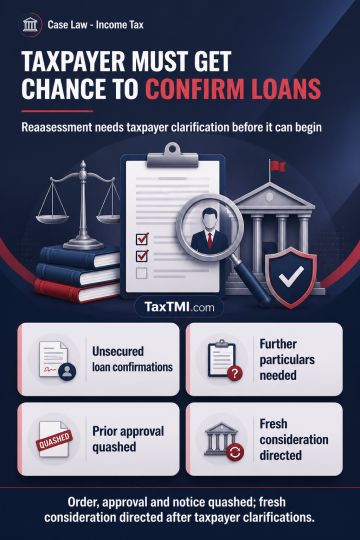
Opportunity to furnish unsecured-loan confirmations is required before reassessment initiation; proceedings require fresh consideration after taxpayer...
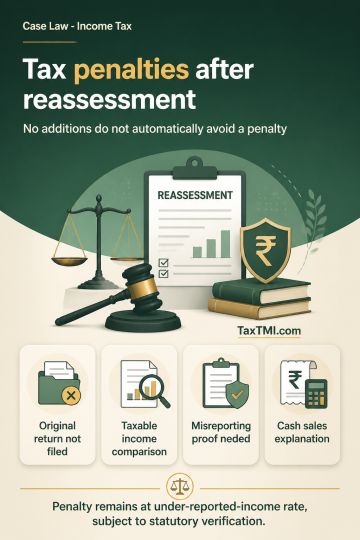
Under-reporting on a first reassessment return attracts penalty, while enhanced misreporting penalty requires proof of a statutory misreporting catego...
Form 26AS evidence requires successor-entity accounting verification after business transfer, while invoice-supported related-party advertising expend...
CESTAT ruled that Notification No. 36/2021-Customs amending N/N. 45/2017-Customs cannot have retrospective effect. The amendment substituted "duty of customs" with "Said duty, tax or cess" for re-imported goods, creating new liability for integrated tax payment. While Explanation (d) claimed to clarify existing provisions, it effectively imposed additional tax obligations not present in the original notification. The Tribunal determined that since the amendment altered substantive tax liability rather than merely clarifying existing provisions, and lacked explicit retrospective application language under Section 25(4) of Customs Act, it could only apply prospectively from publication date. Prior CBIC circular suggesting retrospective application was deemed legally unsustainable.
CESTAT ruled that Notification No. 36/2021-Customs amending N/N. 45/2017-Customs cannot have retrospective effect. The amendment substituted "duty of customs" with "Said duty, tax or cess" for re-imported goods, creating new liability for integrated tax payment. While Explanation (d) claimed to clarify existing provisions, it effectively imposed additional tax obligations not present in the original notification. The Tribunal determined that since the amendment altered substantive tax liability rather than merely clarifying existing provisions, and lacked explicit retrospective application language under Section 25(4) of Customs Act, it could only apply prospectively from publication date. Prior CBIC circular suggesting retrospective application was deemed legally unsustainable.
Note: It is a system-generated summary and is for quick reference only.
 TaxTMI
  TaxTMI
 of 4920