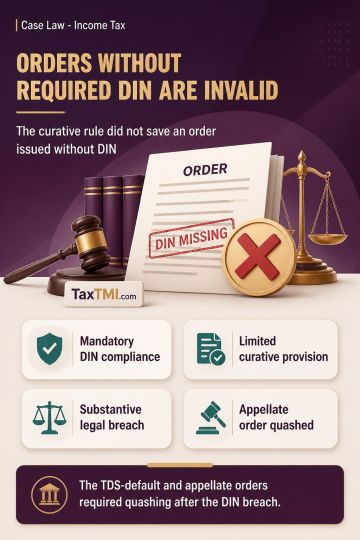
Document Identification Number compliance renders TDS-default orders invalid where mandatory DIN requirements are breached and curative provision does...
CESTAT ruled that sale of capital goods within a 100% EOU to an overseas buyer without physical removal does not constitute deemed debonding requiring customs duty payment. The Tribunal emphasized that ownership transfer alone doesn't trigger duty liability - physical removal is the taxable event for warehoused goods. Since no physical movement occurred outside the EOU premises and no explicit deeming provision exists for treating sale as removal, no duty was payable. Additionally, proper verification by Central Excise authorities during EOU scheme exit precluded invocation of extended limitation period or penalties. The Tribunal set aside the demand, holding that mere transfer of ownership without actual removal cannot attract customs duty liability under existing legal framework.
CESTAT ruled that sale of capital goods within a 100% EOU to an overseas buyer without physical removal does not constitute deemed debonding requiring customs duty payment. The Tribunal emphasized that ownership transfer alone doesn't trigger duty liability - physical removal is the taxable event for warehoused goods. Since no physical movement occurred outside the EOU premises and no explicit deeming provision exists for treating sale as removal, no duty was payable. Additionally, proper verification by Central Excise authorities during EOU scheme exit precluded invocation of extended limitation period or penalties. The Tribunal set aside the demand, holding that mere transfer of ownership without actual removal cannot attract customs duty liability under existing legal framework.
Note: It is a system-generated summary and is for quick reference only.
 TaxTMI
  TaxTMI
 of 4918