Service of notice and contractual debt acknowledgment preserved insolvency admission against a corporate guarantor despite limitation and natural just...
Original works exemption excludes standalone boulder transportation, leaving subcontracted railway-project transport services subject to service tax l...
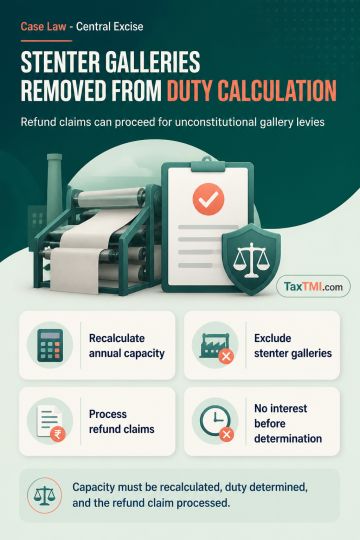
Annual production capacity determinations excluding stenter galleries support refunds for unconstitutional excise levies without an unjust-enrichment ...
Vicarious liability for cheque dishonour requires specific allegations of responsibility and cheque signatory; generic director allegations cannot sus...
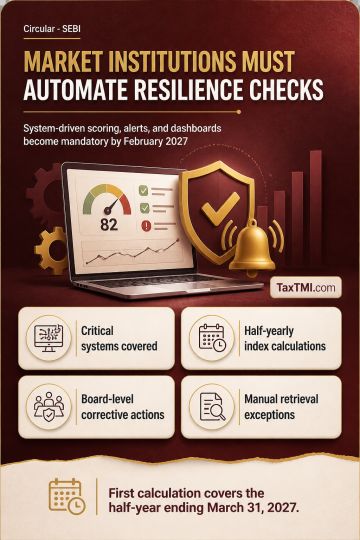
IT Resilience Index requires market infrastructure institutions to automate resilience scoring, early warnings, and continuous service-delivery monito...
CESTAT ruled that in provisional assessment cases, adjustments of excess duty payments against shortfalls must be handled comprehensively. The tribunal determined that Rule 7 does not explicitly address duty adjustment scenarios, while Sub-rule 6 preserves the assessee's refund rights subject to unjust enrichment principles. Following the Karnataka HC's precedent in similar cases, when provisional assessment applies to entire goods, final duty calculations require consolidated adjustments of excess payments against shortfalls. The doctrine of unjust enrichment was found inapplicable where duty burden was not transferred. The appellant successfully established their right to adjust excess duty payments without being subject to unjust enrichment considerations. Appeal sustained.
CESTAT ruled that in provisional assessment cases, adjustments of excess duty payments against shortfalls must be handled comprehensively. The tribunal determined that Rule 7 does not explicitly address duty adjustment scenarios, while Sub-rule 6 preserves the assessee's refund rights subject to unjust enrichment principles. Following the Karnataka HC's precedent in similar cases, when provisional assessment applies to entire goods, final duty calculations require consolidated adjustments of excess payments against shortfalls. The doctrine of unjust enrichment was found inapplicable where duty burden was not transferred. The appellant successfully established their right to adjust excess duty payments without being subject to unjust enrichment considerations. Appeal sustained.
Note: It is a system-generated summary and is for quick reference only.
 TaxTMI
  TaxTMI
 of 4828














 Join Channel