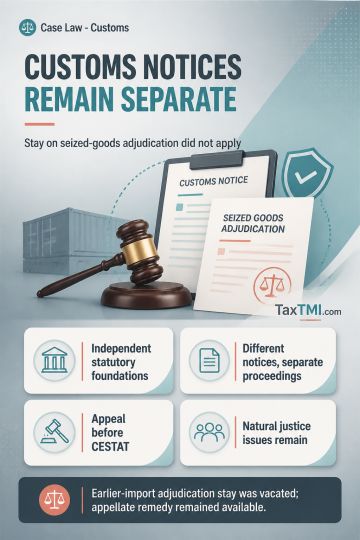
Independent show-cause notices remain separate proceedings, while customs adjudication challenges should ordinarily follow the statutory appellate rem...
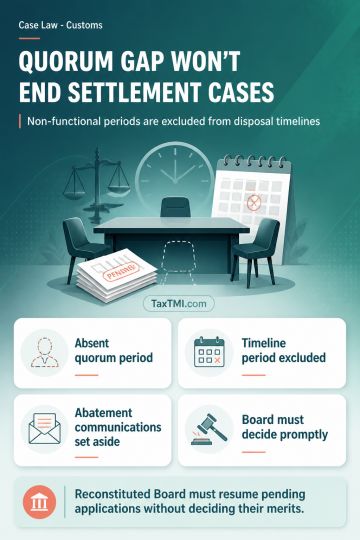
Institutional incapacity in customs settlement proceedings excludes non-functional quorum periods from statutory disposal timelines, preventing automa...
Interactive touchscreen panels with integrated computing functions fall under automatic data-processing machines rather than display monitors for cust...
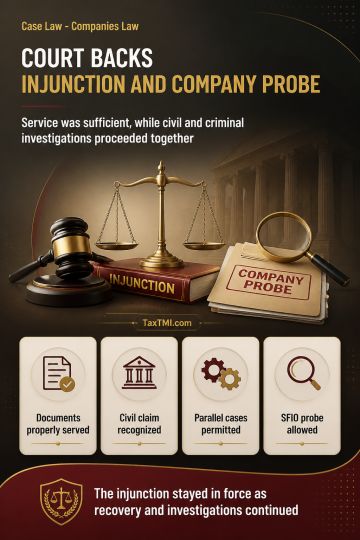
Ex parte injunction service requirements were substantially met, while civil recovery and SFIO investigation into provident fund defalcation continued...
Enforcement of resolution-plan directions continues without a Supreme Court stay, preventing suspension of redistribution and escrowed-fund distributi...
Third-party ownership claims over attached property require Special Court adjudication where purchasers lack registered sale deeds and bona fides rema...
Pure-agent reimbursements in clearing and forwarding services are excluded from taxable value when qualifying third-party payments are properly record...
HC affirmed penalties under Section 74 of CGST Act against petitioner for wilful suppression of facts through non-filing of monthly returns and non-payment of GST. Despite petitioner's claim that non-payment resulted from client's default, evidence showed partial payments were received from the client. Court held that Section 74 penalties require proof of intentional evasion through fraud, wilful misstatement, or deliberate suppression - mere non-payment is insufficient. Here, petitioner's conduct demonstrated wilful suppression as defined in Explanation-2, warranting penalties. Court rejected argument that Section 74 notice was invalid because tax was paid before notice issuance, noting interest under Section 50 remained unpaid. Additional consequential penalties were upheld.
HC affirmed penalties under Section 74 of CGST Act against petitioner for wilful suppression of facts through non-filing of monthly returns and non-payment of GST. Despite petitioner's claim that non-payment resulted from client's default, evidence showed partial payments were received from the client. Court held that Section 74 penalties require proof of intentional evasion through fraud, wilful misstatement, or deliberate suppression - mere non-payment is insufficient. Here, petitioner's conduct demonstrated wilful suppression as defined in Explanation-2, warranting penalties. Court rejected argument that Section 74 notice was invalid because tax was paid before notice issuance, noting interest under Section 50 remained unpaid. Additional consequential penalties were upheld.
Note: It is a system-generated summary and is for quick reference only.
 TaxTMI
 of 4798










 Join Channel


 TaxTMI
