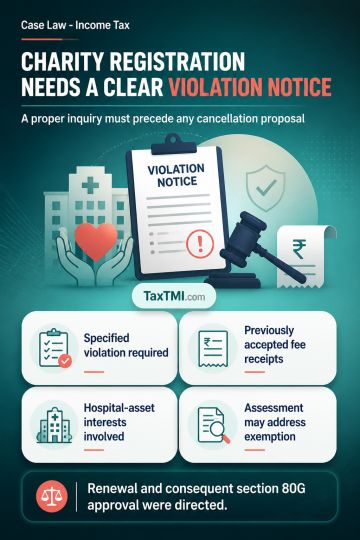
Charitable trust registration requires a specified-violation notice; settled cash deposits and related-party payments did not justify cancellation or ...
External development charges trigger TDS under section 194C, while disputed administrative payments require factual verification and fresh adjudicatio...
Section 270AA penalty immunity requires identified statutory defaults and a hearing before rejection; reassessment disclosure may constitute under-rep...
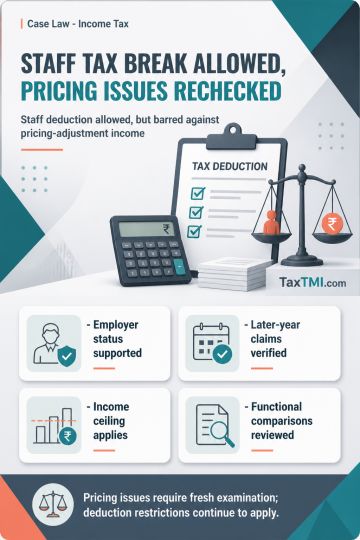
Section 80JJAA employee-cost deduction allowed for deployed staff but barred against transfer-pricing income enhancement, with pricing issues remanded...
Transfer-pricing methodology protects commercially genuine associated-enterprise payments, while pre-2016 secondary adjustments and related notional i...
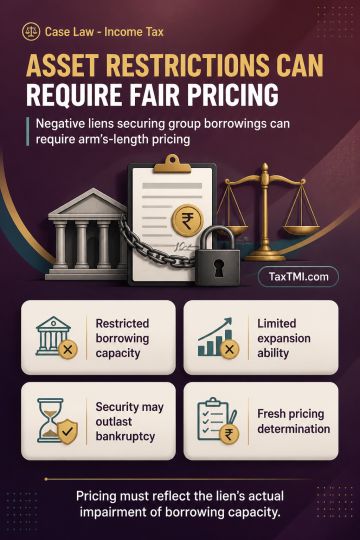
Negative liens over operating assets can constitute international transactions requiring arm's-length pricing reflecting restricted borrowing and expa...
Cross-examination rights in Customs Broker revocation inquiries require witness examination; procedural denial may be cured through fresh adjudication...
The Union Budget 2025-26 emphasizes infrastructure-led economic growth, following the Rs 11.1 lakh crore allocation in 2024-25. Key priorities include expansion of railways, defense, power, and data centers through the National Infrastructure Pipeline. The budget aims to achieve a $7 trillion economy by 2030, requiring $2.2 trillion in infrastructure investment with a projected 3x GDP multiplier effect. Critical focus areas include urban development through PMAY and AMRUT schemes, sustainability initiatives, and public-private partnerships. The government's commitment to PM Gati-Shakti National Master Plan and Jal Jeevan Mission remains central, with emphasis on green building practices and smart city development. The plan aligns with Make in India, targeting growth in manufacturing, construction materials, and technological solutions.
The Union Budget 2025-26 emphasizes infrastructure-led economic growth, following the Rs 11.1 lakh crore allocation in 2024-25. Key priorities include expansion of railways, defense, power, and data centers through the National Infrastructure Pipeline. The budget aims to achieve a $7 trillion economy by 2030, requiring $2.2 trillion in infrastructure investment with a projected 3x GDP multiplier effect. Critical focus areas include urban development through PMAY and AMRUT schemes, sustainability initiatives, and public-private partnerships. The government's commitment to PM Gati-Shakti National Master Plan and Jal Jeevan Mission remains central, with emphasis on green building practices and smart city development. The plan aligns with Make in India, targeting growth in manufacturing, construction materials, and technological solutions.
Note: It is a system-generated summary and is for quick reference only.
 TaxTMI
  TaxTMI
 of 4828


















 Join Channel


