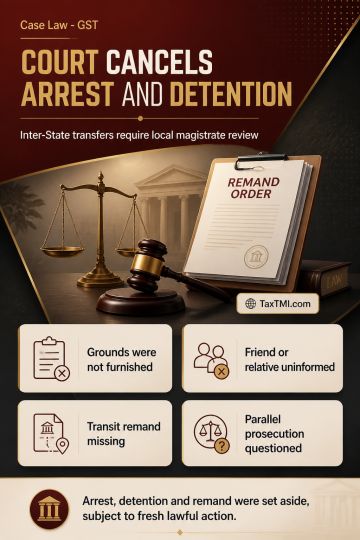
Arrest safeguards and transit remand requirements invalidated detention following inter-State transfer without communicated grounds or magistrate auth...
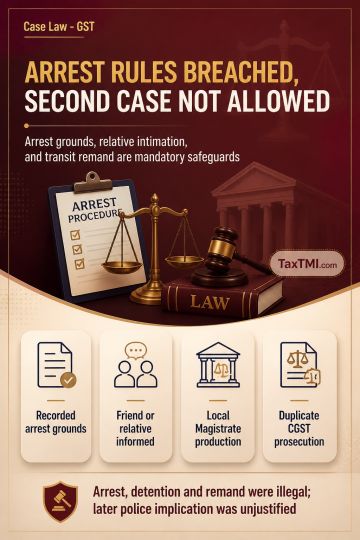
Arrest safeguards require disclosed grounds, relative intimation and transit remand, while duplicate prosecution under the CGST framework is unsustain...
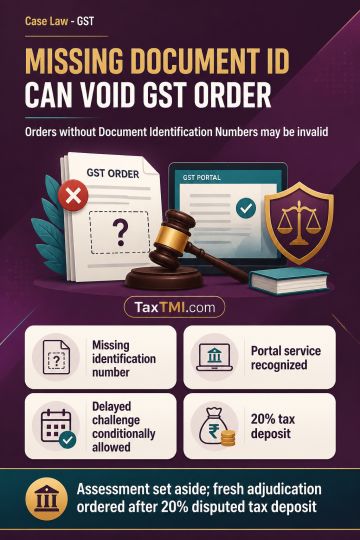
Document Identification Number defects can invalidate GST assessments, with delayed challenges entertained conditionally where patent irregularities e...
Windmill commissioning evidence supported higher depreciation where grid connection and electricity generation proved operational use before the relev...
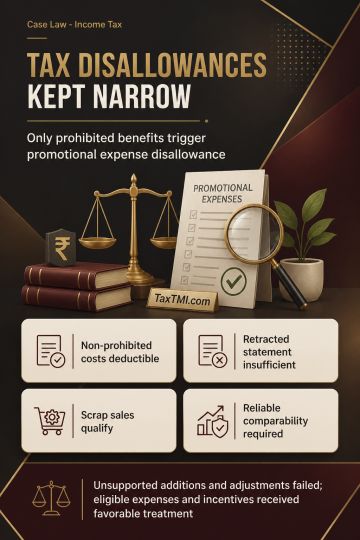
Pharmaceutical promotion and transfer-pricing comparability principles limited disallowances, while uncorroborated search allegations and unsupported ...
HC upheld penalty u/s 129 of WBGST Act 2017 regarding discrepancies in vehicle transportation documentation. The petitioner failed to establish legitimate purchase chain from Mr. X to Company Y, with Input Tax Credit already claimed by Company Z. Documentation inconsistencies included contradictory e-way bill and invoice details, with no tax payment evidence. The margin value scheme was deemed inapplicable. The Court found proper procedural compliance by authorities in issuing notice and providing opportunity for hearing. Despite petitioner's reliance on precedents, the Court distinguished them from present circumstances. The petition challenging penalty order dated May 30, 2023, was dismissed, affirming appropriate invocation of Section 129 provisions.
HC upheld penalty u/s 129 of WBGST Act 2017 regarding discrepancies in vehicle transportation documentation. The petitioner failed to establish legitimate purchase chain from Mr. X to Company Y, with Input Tax Credit already claimed by Company Z. Documentation inconsistencies included contradictory e-way bill and invoice details, with no tax payment evidence. The margin value scheme was deemed inapplicable. The Court found proper procedural compliance by authorities in issuing notice and providing opportunity for hearing. Despite petitioner's reliance on precedents, the Court distinguished them from present circumstances. The petition challenging penalty order dated May 30, 2023, was dismissed, affirming appropriate invocation of Section 129 provisions.
Note: It is a system-generated summary and is for quick reference only.
 TaxTMI
 of 4805








 Join Channel


 TaxTMI