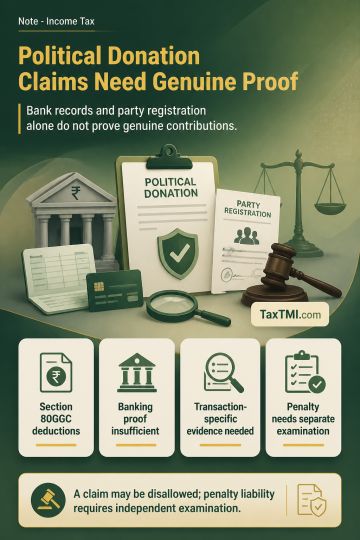
Political contribution deductions require genuine transactions; banking records and party registration alone cannot defeat evidence of accommodation e...
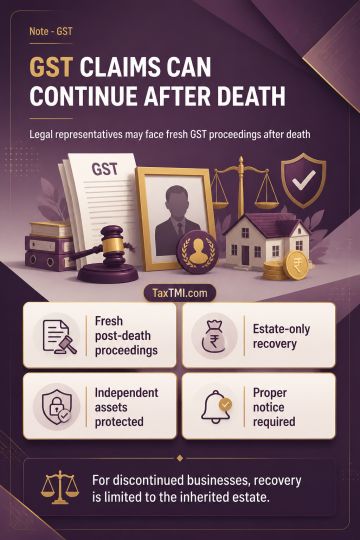
Post-death GST liability permits fresh proceedings against legal representatives, while discontinued-business recovery remains limited to the inherite...
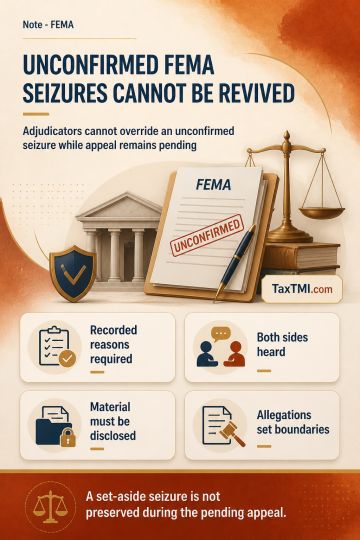
Non-confirmation of FEMA seizure prevents adjudicators from overriding pending appellate findings on recorded reasons and suspected foreign asset hold...
HC held reassessment proceedings initiated u/s 148 were invalid due to statutory limitation u/s 149. The original notice was set aside for lacking mandatory approvals from competent authority. Court rejected Revenue's argument that limitation period should be extended due to prior litigation, stating time spent in previous challenges cannot extend statutory limitation periods. The fact that Revenue failed to take proper legal steps within prescribed timeframe cannot be used to justify extension of limitation period. No court order prevented Revenue from issuing valid notice within limitation period. Petition allowed, reassessment order and notices quashed as time-barred. Litigation time exclusion claim denied as limitation u/s 149 remained absolute.
HC held reassessment proceedings initiated u/s 148 were invalid due to statutory limitation u/s 149. The original notice was set aside for lacking mandatory approvals from competent authority. Court rejected Revenue's argument that limitation period should be extended due to prior litigation, stating time spent in previous challenges cannot extend statutory limitation periods. The fact that Revenue failed to take proper legal steps within prescribed timeframe cannot be used to justify extension of limitation period. No court order prevented Revenue from issuing valid notice within limitation period. Petition allowed, reassessment order and notices quashed as time-barred. Litigation time exclusion claim denied as limitation u/s 149 remained absolute.
Note: It is a system-generated summary and is for quick reference only.
 TaxTMI
  TaxTMI
 of 4918