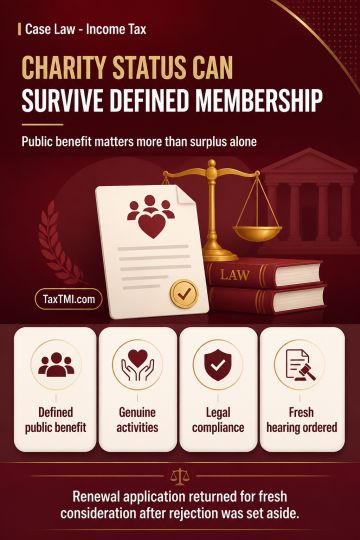
Defined public benefit can retain charitable character; registration renewal requires examining genuine activities and legal compliance, not surplus a...
Capital reduction is distinct from share buy-back, preventing buy-back tax; restructuring interest and related business deductions also survive scruti...
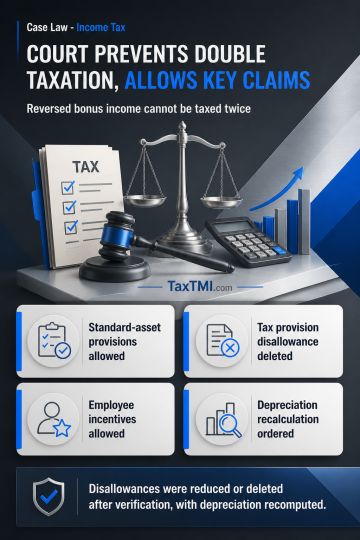
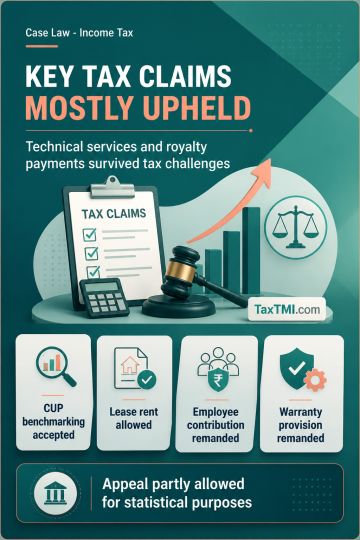
Transfer pricing and tax deductions upheld on established principles, while employee contributions and warranty provisions returned for fresh examinat...
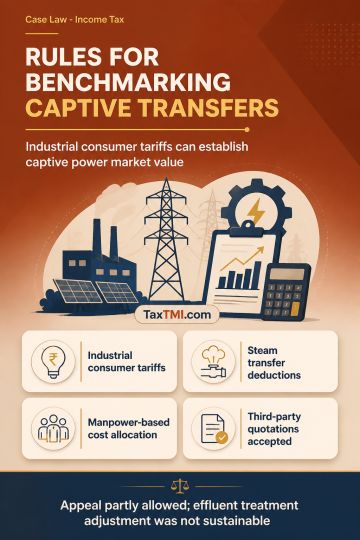
Captive transfer pricing relies on industrial consumer tariffs, while genuine quotations can benchmark effluent treatment transfers under the Other Me...
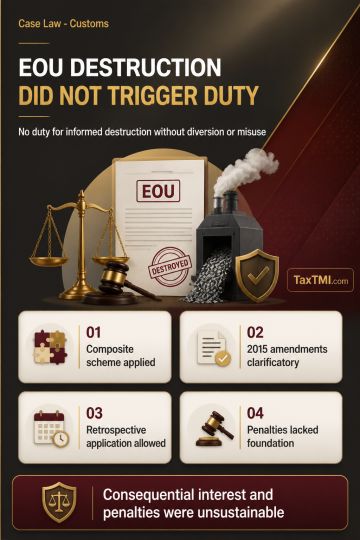
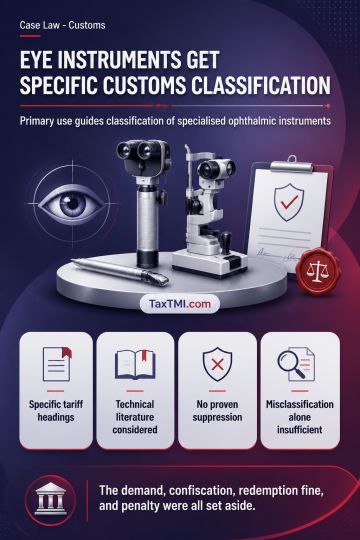
Specific tariff classification for ophthalmic instruments and extended limitation principles determine the treatment of duty demands, confiscation, an...
HC ruled that principles of res judicata apply to subsequent applications u/s 466 of Companies Act, 1956. The Court dissolved the stay on winding-up proceedings, emphasizing that mere settlement with creditors or workers is insufficient grounds for staying liquidation. The discretionary power u/s 466(1) requires proof satisfying the Court that proceedings ought to be stayed. The Court must consider commercial morality beyond creditors' wishes. The jurisdiction to stay proceedings can only be exercised to revive the company or its business, not to facilitate acquisition of assets at undervalued prices. The appeal was allowed, setting aside previous orders for failing to properly apply Section 466 principles and consider vital evidence.
HC ruled that principles of res judicata apply to subsequent applications u/s 466 of Companies Act, 1956. The Court dissolved the stay on winding-up proceedings, emphasizing that mere settlement with creditors or workers is insufficient grounds for staying liquidation. The discretionary power u/s 466(1) requires proof satisfying the Court that proceedings ought to be stayed. The Court must consider commercial morality beyond creditors' wishes. The jurisdiction to stay proceedings can only be exercised to revive the company or its business, not to facilitate acquisition of assets at undervalued prices. The appeal was allowed, setting aside previous orders for failing to properly apply Section 466 principles and consider vital evidence.
Note: It is a system-generated summary and is for quick reference only.
 TaxTMI
 of 4805









 Join Channel


 TaxTMI