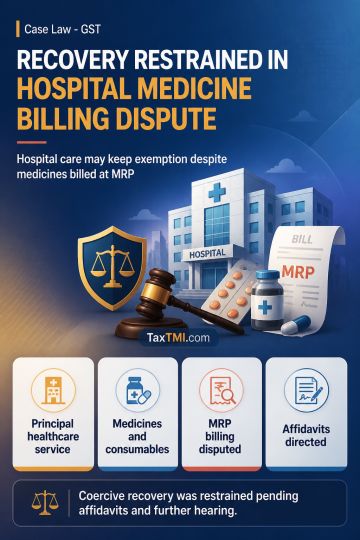
Composite inpatient healthcare supply may retain exemption despite MRP medicine billing, while separate taxable sale characterisation remains disputed...
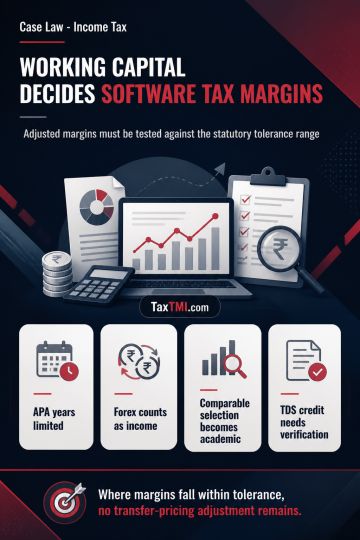
Working-capital adjustment determines whether software-services transfer-pricing margins fall within the statutory tolerance range, eliminating any ad...
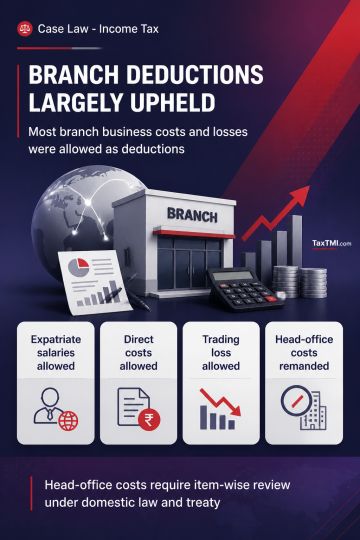
Permanent establishment deductions upheld for expatriate salaries, direct costs and trading losses, while head-office costs require fresh classificati...
HC ruled that principles of res judicata apply to subsequent applications u/s 466 of Companies Act, 1956. The Court dissolved the stay on winding-up proceedings, emphasizing that mere settlement with creditors or workers is insufficient grounds for staying liquidation. The discretionary power u/s 466(1) requires proof satisfying the Court that proceedings ought to be stayed. The Court must consider commercial morality beyond creditors' wishes. The jurisdiction to stay proceedings can only be exercised to revive the company or its business, not to facilitate acquisition of assets at undervalued prices. The appeal was allowed, setting aside previous orders for failing to properly apply Section 466 principles and consider vital evidence.
HC ruled that principles of res judicata apply to subsequent applications u/s 466 of Companies Act, 1956. The Court dissolved the stay on winding-up proceedings, emphasizing that mere settlement with creditors or workers is insufficient grounds for staying liquidation. The discretionary power u/s 466(1) requires proof satisfying the Court that proceedings ought to be stayed. The Court must consider commercial morality beyond creditors' wishes. The jurisdiction to stay proceedings can only be exercised to revive the company or its business, not to facilitate acquisition of assets at undervalued prices. The appeal was allowed, setting aside previous orders for failing to properly apply Section 466 principles and consider vital evidence.
Note: It is a system-generated summary and is for quick reference only.
 TaxTMI
 of 4805





 Join Channel


 TaxTMI
