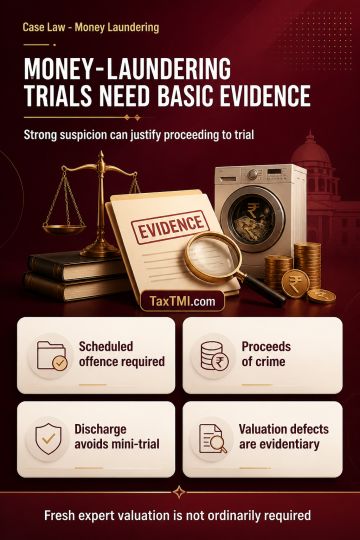
Provisional attachment of laundered funds and equivalent-value property sustained, with statutory protection limited to pension, gratuity and providen...
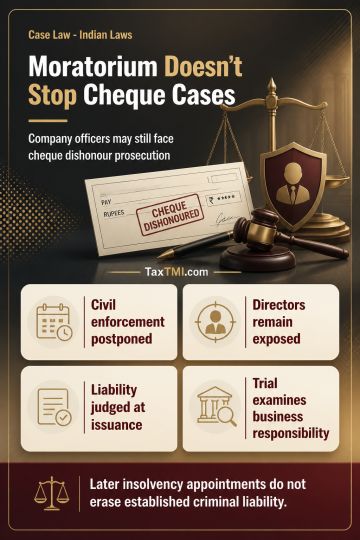
Insolvency moratorium does not shield company officers from cheque dishonour prosecution for liability arising before corporate insolvency proceedings...
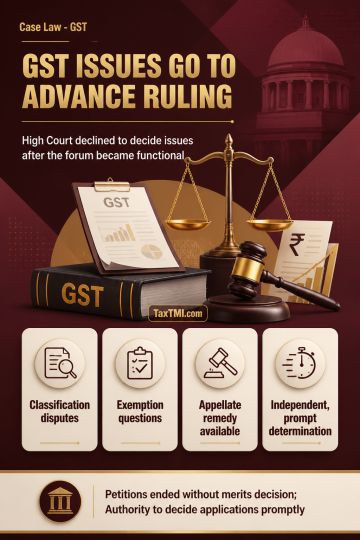
Advance-ruling mechanism governs pending GST classification, exemption and taxability disputes, limiting writ review once the specialised forum functi...
HC ruled that principles of res judicata apply to subsequent applications u/s 466 of Companies Act, 1956. The Court dissolved the stay on winding-up proceedings, emphasizing that mere settlement with creditors or workers is insufficient grounds for staying liquidation. The discretionary power u/s 466(1) requires proof satisfying the Court that proceedings ought to be stayed. The Court must consider commercial morality beyond creditors' wishes. The jurisdiction to stay proceedings can only be exercised to revive the company or its business, not to facilitate acquisition of assets at undervalued prices. The appeal was allowed, setting aside previous orders for failing to properly apply Section 466 principles and consider vital evidence.
HC ruled that principles of res judicata apply to subsequent applications u/s 466 of Companies Act, 1956. The Court dissolved the stay on winding-up proceedings, emphasizing that mere settlement with creditors or workers is insufficient grounds for staying liquidation. The discretionary power u/s 466(1) requires proof satisfying the Court that proceedings ought to be stayed. The Court must consider commercial morality beyond creditors' wishes. The jurisdiction to stay proceedings can only be exercised to revive the company or its business, not to facilitate acquisition of assets at undervalued prices. The appeal was allowed, setting aside previous orders for failing to properly apply Section 466 principles and consider vital evidence.
Note: It is a system-generated summary and is for quick reference only.
 TaxTMI
 of 4803







 Join Channel


 TaxTMI
