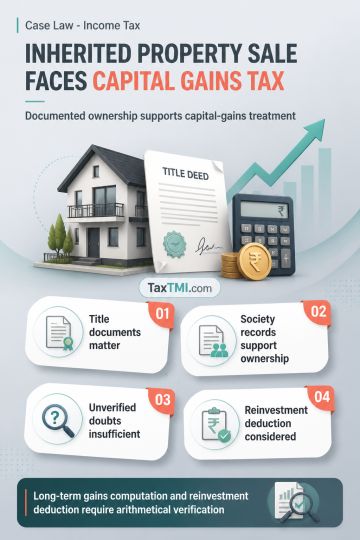
Inherited property sale proceeds require capital-gains treatment where ownership is supported by evidence, not suspicion or unverified signature doubt...
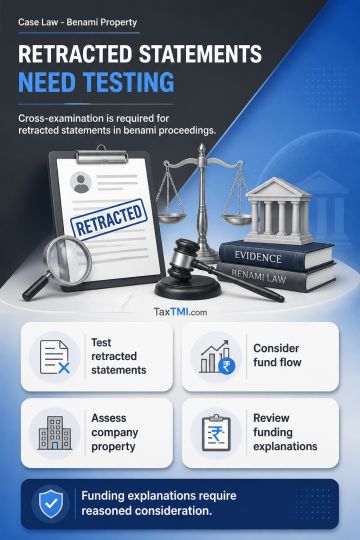
Cross-examination of retracted statements is essential where foundational evidence supports a benami allegation and documented funding explanations re...
Capital-goods exemption covers plant-modernisation accessories, while the import restriction applies only to earlier capital-goods components and spar...
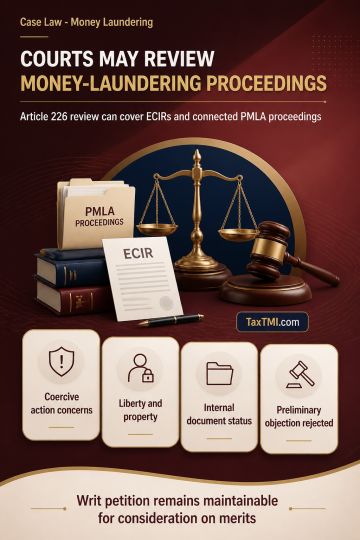
Constitutional judicial review permits challenges to ECIRs and connected money-laundering proceedings where coercive action affects fundamental intere...
The Central Government has waived excess late fees u/s 47 of CGST Act for registered persons who failed to file GSTR-9C reconciliation statements alongside GSTR-9 annual returns for FY 2017-18 through 2022-23. This waiver applies to late fees exceeding the prescribed amount u/s 47, provided the pending GSTR-9C is filed by March 31, 2025. The notification, issued u/s 128 of CGST Act upon GST Council's recommendation, specifically excludes refunds of any late fees already paid for delayed GSTR-9C submissions during these financial years. The waiver aims to facilitate compliance for taxpayers who have outstanding reconciliation statement obligations.
The Central Government has waived excess late fees u/s 47 of CGST Act for registered persons who failed to file GSTR-9C reconciliation statements alongside GSTR-9 annual returns for FY 2017-18 through 2022-23. This waiver applies to late fees exceeding the prescribed amount u/s 47, provided the pending GSTR-9C is filed by March 31, 2025. The notification, issued u/s 128 of CGST Act upon GST Council's recommendation, specifically excludes refunds of any late fees already paid for delayed GSTR-9C submissions during these financial years. The waiver aims to facilitate compliance for taxpayers who have outstanding reconciliation statement obligations.
Note: It is a system-generated summary and is for quick reference only.
 TaxTMI
 of 4805






 Join Channel


 TaxTMI