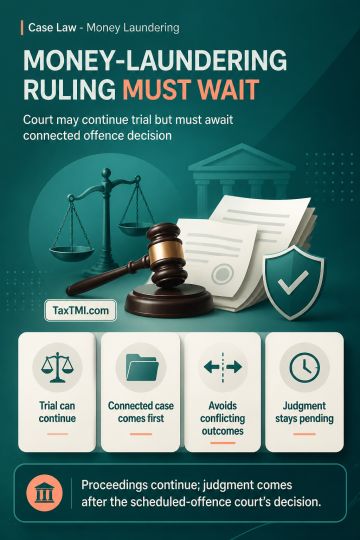
Money-laundering judgment timing requires awaiting the scheduled-offence decision despite continuation of the underlying trial where outcomes directly...
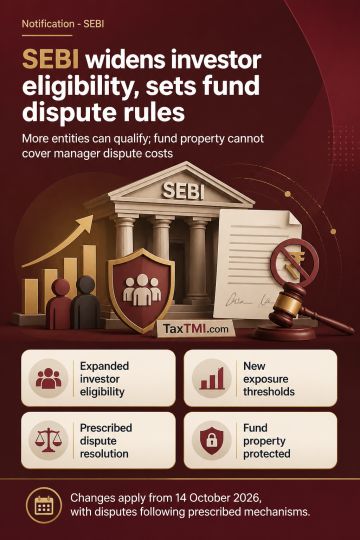
Accredited investor eligibility expands through securities-market exposure, while alternative investment fund disputes require prescribed resolution a...
Customs Assessment Portal centralises classification and valuation guidance to support consistent, transparent and informed compliance across stakehol...
HC set aside penalty orders under GST Act Section 129(1) and allowed refund application. The appellate authority's dismissal was deemed unjustified as there was no clear tax evasion intent. While the e-way bill showed dispatch from Durgapur without full supplier details, the court found this omission insufficient to establish evasion, noting the goods moved in the same vehicle (WB 41D 1508) as per both e-way bill and tax invoice. The court emphasized that acceptance of dispatch details in the e-way bill portal's Part-A submission indicated compliance, and mere incomplete supplier information didn't constitute tax evasion intent. The court directed authorities to process refund applications as per law.
HC set aside penalty orders under GST Act Section 129(1) and allowed refund application. The appellate authority's dismissal was deemed unjustified as there was no clear tax evasion intent. While the e-way bill showed dispatch from Durgapur without full supplier details, the court found this omission insufficient to establish evasion, noting the goods moved in the same vehicle (WB 41D 1508) as per both e-way bill and tax invoice. The court emphasized that acceptance of dispatch details in the e-way bill portal's Part-A submission indicated compliance, and mere incomplete supplier information didn't constitute tax evasion intent. The court directed authorities to process refund applications as per law.
Note: It is a system-generated summary and is for quick reference only.
 TaxTMI
  TaxTMI
 of 4920