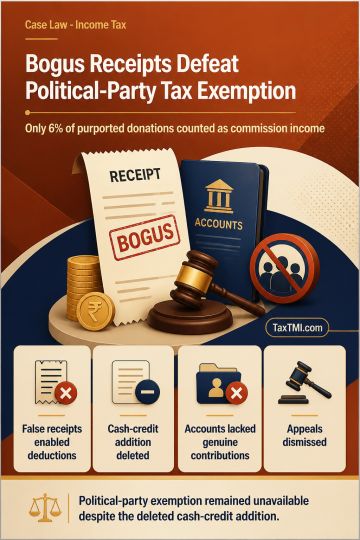
Bogus donation receipts justified commission income assessment and defeated political-party tax exemption for inaccurate accounts and reporting failur...
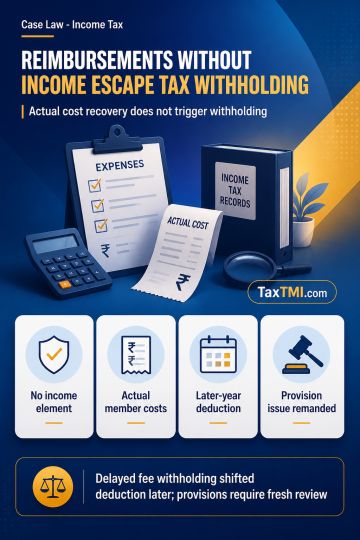
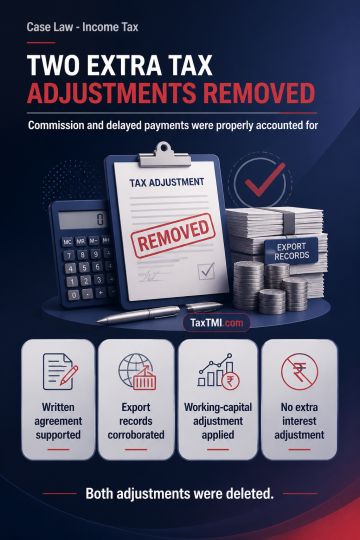
Pure reimbursement without income element escapes tax withholding, while delayed withholding and unsupported provisions face deferred or renewed scrut...
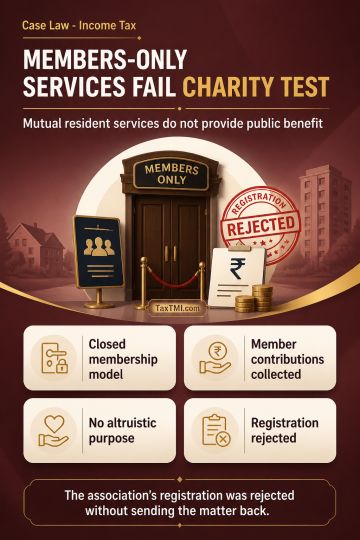
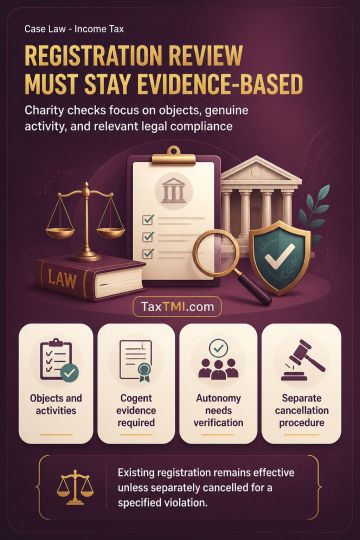
Public benefit requirement defeats charitable registration where residents' association services are reciprocal, member-only facilities governed by mu...
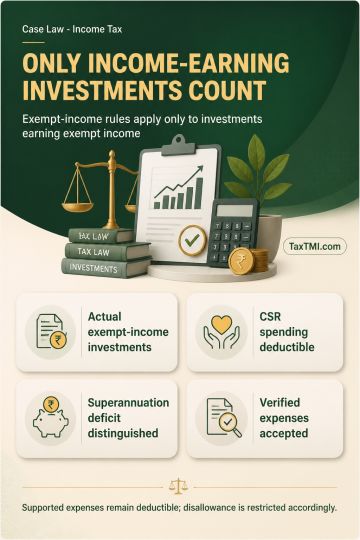
Exempt-income expenditure disallowance is confined to investments that actually generated exempt income, while supported business expenses remain dedu...
Objective characteristics and principal use govern mining-tyre classification, while fresh advance ruling applications may rely on additional technica...
Page of 4805
Press 'Enter' after typing page number.
801 to 820 of 96092 Results
❮
❯
❯❯
0 / 200
Expand Note
Add to Folder
No Folders have been created
+
Are you sure you want to delete "My most important" ?
HC set aside penalty orders under GST Act Section 129(1) and allowed refund application. The appellate authority's dismissal was deemed unjustified as there was no clear tax evasion intent. While the e-way bill showed dispatch from Durgapur without full supplier details, the court found this omission insufficient to establish evasion, noting the goods moved in the same vehicle (WB 41D 1508) as per both e-way bill and tax invoice. The court emphasized that acceptance of dispatch details in the e-way bill portal's Part-A submission indicated compliance, and mere incomplete supplier information didn't constitute tax evasion intent. The court directed authorities to process refund applications as per law.
HC set aside penalty orders under GST Act Section 129(1) and allowed refund application. The appellate authority's dismissal was deemed unjustified as there was no clear tax evasion intent. While the e-way bill showed dispatch from Durgapur without full supplier details, the court found this omission insufficient to establish evasion, noting the goods moved in the same vehicle (WB 41D 1508) as per both e-way bill and tax invoice. The court emphasized that acceptance of dispatch details in the e-way bill portal's Part-A submission indicated compliance, and mere incomplete supplier information didn't constitute tax evasion intent. The court directed authorities to process refund applications as per law.
Note: It is a system-generated summary and is for quick reference only.
 TaxTMI
 of 4805



 Join Channel


 TaxTMI