Interactive touchscreen panels with integrated computing functions fall under automatic data-processing machines rather than display monitors for cust...
Ex parte injunction service requirements were substantially met, while civil recovery and SFIO investigation into provident fund defalcation continued...
Enforcement of resolution-plan directions continues without a Supreme Court stay, preventing suspension of redistribution and escrowed-fund distributi...
Third-party ownership claims over attached property require Special Court adjudication where purchasers lack registered sale deeds and bona fides rema...
Pure-agent reimbursements in clearing and forwarding services are excluded from taxable value when qualifying third-party payments are properly record...
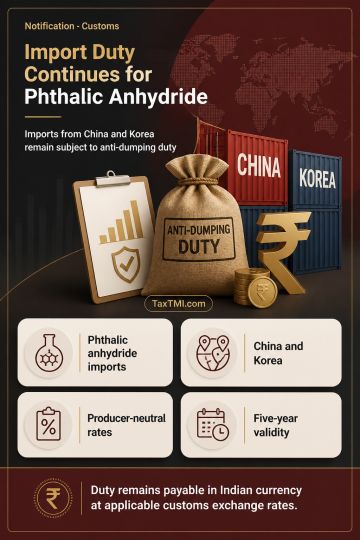
Customs relief for Strait of Hormuz maritime disruptions remains available, with existing conditions continuing unchanged through the extended validit...
The GST Council approved formation of a GoM on restructuring Compensation Cess to examine revenue impacts on states post-GST implementation. Key points: Karnataka raised concerns about revenue loss of approximately 0.7% of GSDP despite higher GST collections and growth rates compared to national average. The state clarified this was due to being a producer state under destination-based taxation. The Council agreed to form a GoM chaired by Minister of State (Finance) to: - Analyze state-wise revenue data considering COVID-19 impacts - Review compensation cess structure beyond March 2026 - Examine challenges faced by manufacturing states - Consider solutions within GST's destination-based framework Pre vs Post-GST comparison shows: - Pre-GST (2012-16): 8.3% growth rate, 11.5% GDP growth, 0.72 tax buoyancy - Post-GST (2018-23): 12.3% growth rate, 9.8% GDP growth, 1.25 tax buoyancy The GoM will submit detailed analysis and recommendations for Council's consideration before compensation cess expires in March 2026.
The GST Council approved formation of a GoM on restructuring Compensation Cess to examine revenue impacts on states post-GST implementation. Key points: Karnataka raised concerns about revenue loss of approximately 0.7% of GSDP despite higher GST collections and growth rates compared to national average. The state clarified this was due to being a producer state under destination-based taxation. The Council agreed to form a GoM chaired by Minister of State (Finance) to: - Analyze state-wise revenue data considering COVID-19 impacts - Review compensation cess structure beyond March 2026 - Examine challenges faced by manufacturing states - Consider solutions within GST's destination-based framework Pre vs Post-GST comparison shows: - Pre-GST (2012-16): 8.3% growth rate, 11.5% GDP growth, 0.72 tax buoyancy - Post-GST (2018-23): 12.3% growth rate, 9.8% GDP growth, 1.25 tax buoyancy The GoM will submit detailed analysis and recommendations for Council's consideration before compensation cess expires in March 2026.
Note: It is a system-generated summary and is for quick reference only.
 TaxTMI
 of 4803
















 Join Channel


 TaxTMI