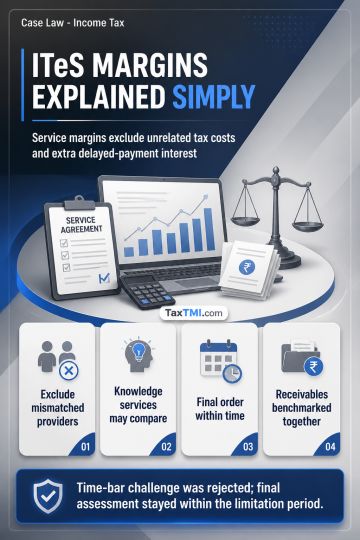
Transfer-pricing treatment of ITeS margins excludes pass-through tax recoveries and separate delayed-receivables interest after working-capital adjust...
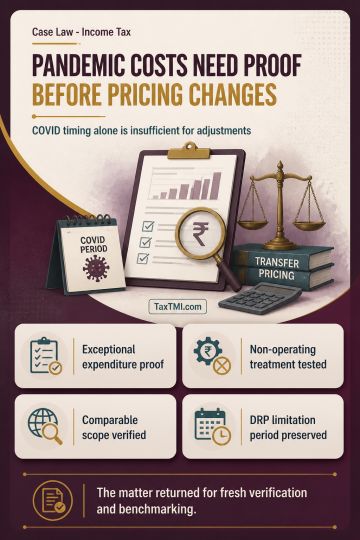
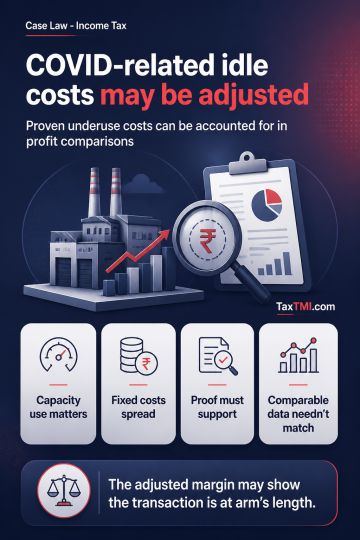
Capacity-utilisation adjustments under TNMM can neutralise substantiated COVID-related idle costs where underutilisation materially affects profitabil...
TNMM functional comparability requires excluding rice manufacturers from a pure Basmati rice trader's benchmark and recognising operating export recei...
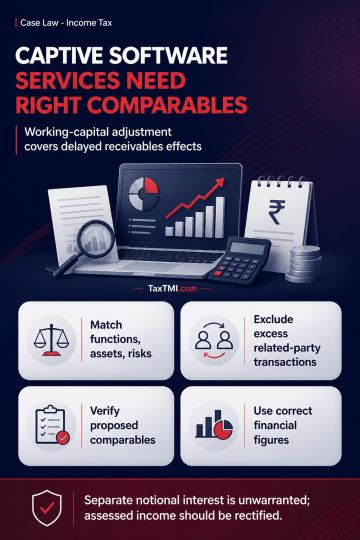
Working-capital adjustment subsumes delayed-receivable effects in TNMM benchmarking of captive software-development services, avoiding separate notion...
Transfer-pricing comparability requires exclusion of financially illogical super-profit comparables and correction of unsupported annual-report and ma...
Charitable character assessment preserves Section 80G approval despite inclusive spiritual teachings and incidental religious expenditure within the s...
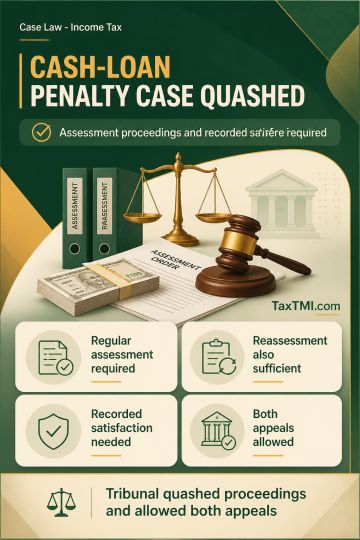
Penalty proceedings for cash-loan acceptance require assessment proceedings and recorded Assessing Officer satisfaction; absent these, the proceedings...
Page of 4828
Press 'Enter' after typing page number.
161 to 180 of 96556 Results
❮
❯
❯❯
0 / 200
Expand Note
Add to Folder
No Folders have been created
+
Are you sure you want to delete "My most important" ?
The HC dismissed the petition filed by the petitioner challenging the rejection of its One Time Settlement (OTS) proposal and seeking relief after commencement of the Corporate Insolvency Resolution Process (CIRP) of its step-down subsidiary/Borrower Entity. The HC held that the petitioner failed to approach the court immediately after the OTS rejection, and the delay clouded its bona fides. The RBI Framework must give way to the CIRP once initiated, as the IBC is a self-contained Code. The HC ruled that it cannot compel the sole Financial Creditor to accept an OTS proposal once the CIRP commences, as it replaces bipartite negotiations with multi-party resolutions involving the Committee of Creditors (CoC). The petitioner had an alternative statutory remedy under the IBC but failed to avail it. The withdrawal from CIRP after the CoC's approval of the Resolution Plan would unsettle the binding settlement with the Successful Resolution Applicant. The power to withdraw u/s 12A is subject to the CoC's approval.
The HC dismissed the petition filed by the petitioner challenging the rejection of its One Time Settlement (OTS) proposal and seeking relief after commencement of the Corporate Insolvency Resolution Process (CIRP) of its step-down subsidiary/Borrower Entity. The HC held that the petitioner failed to approach the court immediately after the OTS rejection, and the delay clouded its bona fides. The RBI Framework must give way to the CIRP once initiated, as the IBC is a self-contained Code. The HC ruled that it cannot compel the sole Financial Creditor to accept an OTS proposal once the CIRP commences, as it replaces bipartite negotiations with multi-party resolutions involving the Committee of Creditors (CoC). The petitioner had an alternative statutory remedy under the IBC but failed to avail it. The withdrawal from CIRP after the CoC's approval of the Resolution Plan would unsettle the binding settlement with the Successful Resolution Applicant. The power to withdraw u/s 12A is subject to the CoC's approval.
Note: It is a system-generated summary and is for quick reference only.
 TaxTMI
  TaxTMI
 of 4828







 Join Channel