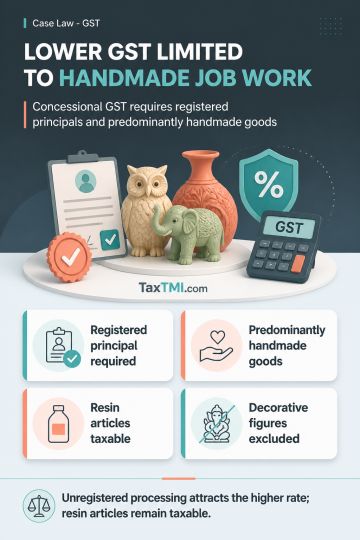
Handicraft job work receives concessional GST only for registered principals and predominantly handmade goods; commercial resin articles remain taxabl...
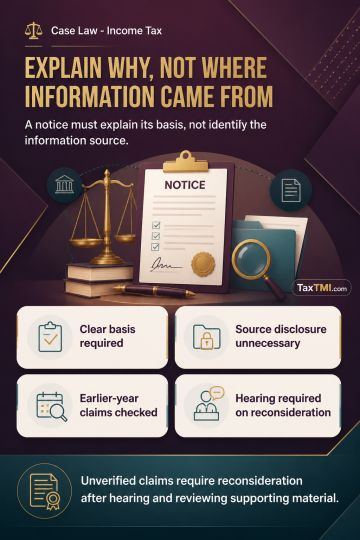
Reassessment disclosure requirements permit stated reasons without revealing information sources, but prior-taxation claims require full examination b...
Independent assessment discretion and corroborated electronic evidence determine validity of on-money additions and undisclosed-consideration assessme...
The ITAT upheld the CIT(A)'s order allowing deduction u/s 11, following the 'Principle of Consistency'. Despite payments to specified persons u/s 13(1)(c), the Revenue had allowed exemption in earlier years without adverse remarks. Applying Radhasoami Satsang, the ITAT ruled that without a change in facts or the earlier order being arbitrary/perverse, the Revenue cannot deviate from its consistent stance in subsequent years. Certainty and finality are essential, mandating consistent treatment unless material differences exist. The DR failed to demonstrate any infirmity or factual changes, leading to the decision against the Revenue.
The ITAT upheld the CIT(A)'s order allowing deduction u/s 11, following the 'Principle of Consistency'. Despite payments to specified persons u/s 13(1)(c), the Revenue had allowed exemption in earlier years without adverse remarks. Applying Radhasoami Satsang, the ITAT ruled that without a change in facts or the earlier order being arbitrary/perverse, the Revenue cannot deviate from its consistent stance in subsequent years. Certainty and finality are essential, mandating consistent treatment unless material differences exist. The DR failed to demonstrate any infirmity or factual changes, leading to the decision against the Revenue.
Note: It is a system-generated summary and is for quick reference only.
 TaxTMI
  TaxTMI
 of 4828



















 Join Channel


