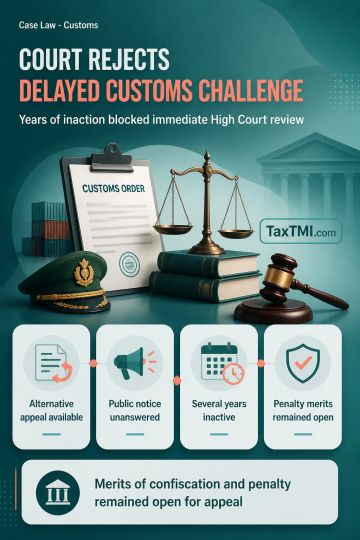
Alternative statutory remedy and unexplained delay barred writ review of customs confiscation adjudication, leaving merits for appellate consideration...
Authorised courier due diligence protects against penalties where declared exports conceal prohibited goods despite proper documentation and customs p...
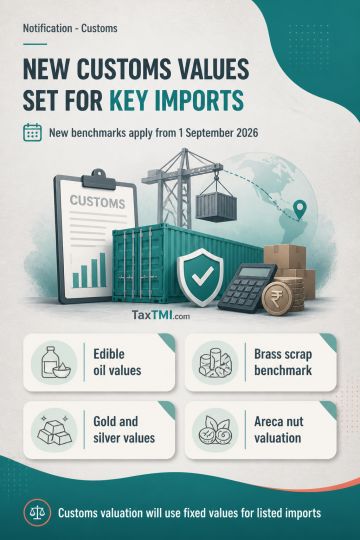
Customs-controlled container movement now extends to DP World facilities, subject to segregation, inspections, reconciliation, and EXIM cargo priority...
The ITAT held that the notice u/s 148 of the Income Tax Act was invalid and quashed it. For the relevant assessment year 2017-18, the time limit of three years lapsed on 31.03.2021. As per the amended provisions read with TOLA, the specified authority for granting approval beyond three years is the Principal Chief Commissioner or higher officials. However, the approval was obtained from the Principal Commissioner, which was contrary to the statutory requirement. Following the Supreme Court precedents in Ashish Agarwal and Rajiv Bansal cases, the ITAT ruled that since the specified authority's sanction was not obtained as mandated, the notice u/s 148 issued beyond three years was invalid and bad in law. The decision was in favor of the assessee.
The ITAT held that the notice u/s 148 of the Income Tax Act was invalid and quashed it. For the relevant assessment year 2017-18, the time limit of three years lapsed on 31.03.2021. As per the amended provisions read with TOLA, the specified authority for granting approval beyond three years is the Principal Chief Commissioner or higher officials. However, the approval was obtained from the Principal Commissioner, which was contrary to the statutory requirement. Following the Supreme Court precedents in Ashish Agarwal and Rajiv Bansal cases, the ITAT ruled that since the specified authority's sanction was not obtained as mandated, the notice u/s 148 issued beyond three years was invalid and bad in law. The decision was in favor of the assessee.
Note: It is a system-generated summary and is for quick reference only.
 TaxTMI
  TaxTMI
 of 4828










 Join Channel


