TNMM functional comparability requires excluding rice manufacturers from a pure Basmati rice trader's benchmark and recognising operating export recei...
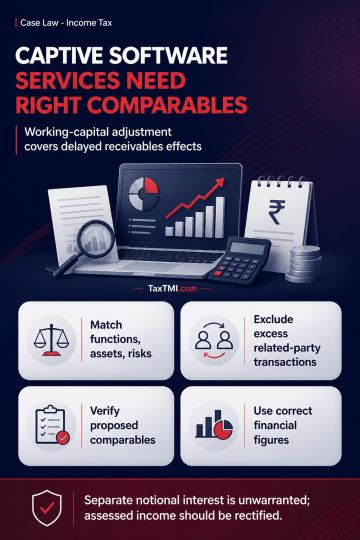
Working-capital adjustment subsumes delayed-receivable effects in TNMM benchmarking of captive software-development services, avoiding separate notion...
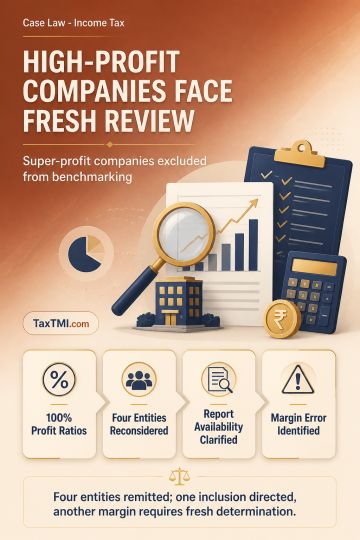
Transfer-pricing comparability requires exclusion of financially illogical super-profit comparables and correction of unsupported annual-report and ma...
Charitable character assessment preserves Section 80G approval despite inclusive spiritual teachings and incidental religious expenditure within the s...
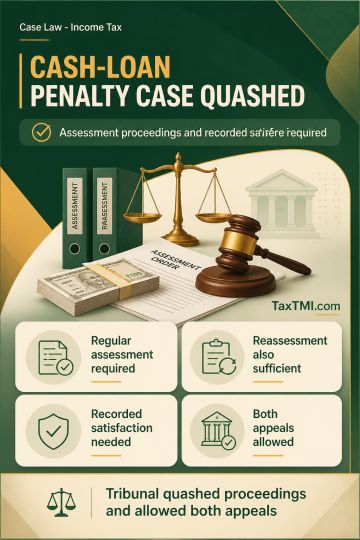
Penalty proceedings for cash-loan acceptance require assessment proceedings and recorded Assessing Officer satisfaction; absent these, the proceedings...
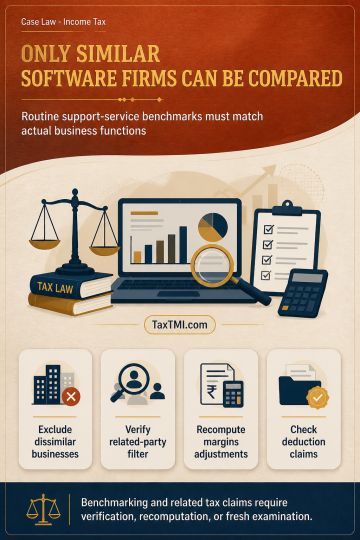
Functional comparability governs software-service benchmarking: dissimilar companies are excluded, while related-party filters, margins and working-ca...
The ITAT upheld the validity of reopening of assessment u/s 147 despite the existence of Section 153C pertaining to assessments following search and seizure operations. It relied on the precedent PCIT vs Naveen Gupta, which held that the non-obstante clause in Section 153C does not bar reassessment u/s 147. The ITAT found merit in the revenue's arguments that the AO had tangible material and recorded reasons for initiating reassessment proceedings, and its jurisdiction could not be challenged at this stage as per Abhishek Jain. The ITAT dismissed the assessee's contentions regarding lack of notice and overseas detention. Regarding penalty u/s 271(1)(c), the ITAT upheld the levy, citing the Supreme Court's decision in MAK Data (P) Limited, as the assessee failed to provide a reasonable explanation for concealment of income.
The ITAT upheld the validity of reopening of assessment u/s 147 despite the existence of Section 153C pertaining to assessments following search and seizure operations. It relied on the precedent PCIT vs Naveen Gupta, which held that the non-obstante clause in Section 153C does not bar reassessment u/s 147. The ITAT found merit in the revenue's arguments that the AO had tangible material and recorded reasons for initiating reassessment proceedings, and its jurisdiction could not be challenged at this stage as per Abhishek Jain. The ITAT dismissed the assessee's contentions regarding lack of notice and overseas detention. Regarding penalty u/s 271(1)(c), the ITAT upheld the levy, citing the Supreme Court's decision in MAK Data (P) Limited, as the assessee failed to provide a reasonable explanation for concealment of income.
Note: It is a system-generated summary and is for quick reference only.
 TaxTMI
  TaxTMI
 of 4830









 Join Channel


