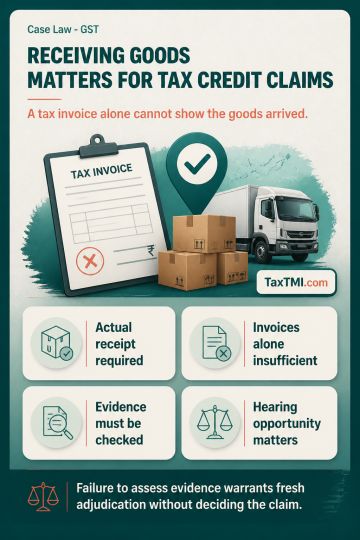
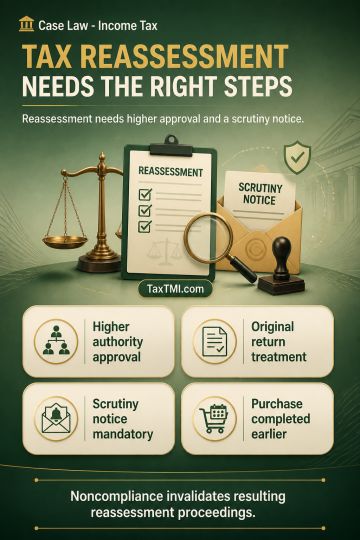
Opportunity to furnish unsecured-loan confirmations is required before reassessment initiation; proceedings require fresh consideration after taxpayer...
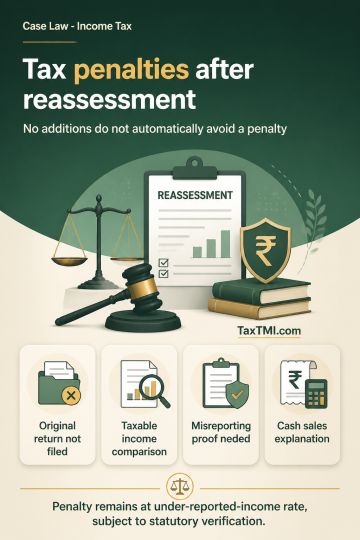
Under-reporting on a first reassessment return attracts penalty, while enhanced misreporting penalty requires proof of a statutory misreporting catego...
The HC allowed the appeal, holding that the insertion of Section 5A(1A) in the Central Excise Act, 1944 is prospective, not clarificatory. Prior to the amendment, the appellant had the option to forego the exemption on final products and pay duty to claim CENVAT credit on inputs. However, post-amendment, manufacturers of exempted excisable goods are prohibited from paying duty, precluding them from claiming CENVAT credit. The Tribunal erred in upholding the demand of CENVAT credit where the appellant had paid duty on final products and utilized input credits.
The HC allowed the appeal, holding that the insertion of Section 5A(1A) in the Central Excise Act, 1944 is prospective, not clarificatory. Prior to the amendment, the appellant had the option to forego the exemption on final products and pay duty to claim CENVAT credit on inputs. However, post-amendment, manufacturers of exempted excisable goods are prohibited from paying duty, precluding them from claiming CENVAT credit. The Tribunal erred in upholding the demand of CENVAT credit where the appellant had paid duty on final products and utilized input credits.
Note: It is a system-generated summary and is for quick reference only.
 TaxTMI
  TaxTMI
 of 4915