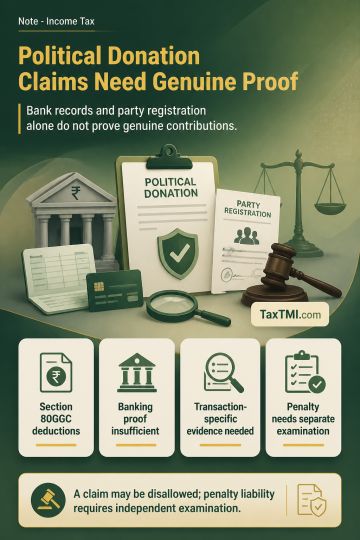
Political contribution deductions require genuine transactions; banking records and party registration alone cannot defeat evidence of accommodation e...
Post-death GST liability permits fresh proceedings against legal representatives, while discontinued-business recovery remains limited to the inherite...
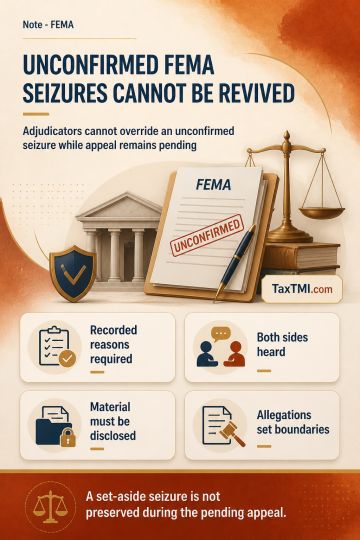
Non-confirmation of FEMA seizure prevents adjudicators from overriding pending appellate findings on recorded reasons and suspected foreign asset hold...
The CESTAT allowed the appeal against confiscation of gold, holding that the seizure by customs officials lacked reasonable belief of the goods being smuggled as mandated u/s 123 of the Customs Act, 1962. The appellant successfully discharged the burden of proof by producing documents regarding procurement of the gold. Confiscation u/s 111(d) was held unsustainable as the gold was importable subject to conditions. The absence of reasonable belief vitiated the entire proceedings, rendering the show cause notice and consequent adjudication bad in law.
The CESTAT allowed the appeal against confiscation of gold, holding that the seizure by customs officials lacked reasonable belief of the goods being smuggled as mandated u/s 123 of the Customs Act, 1962. The appellant successfully discharged the burden of proof by producing documents regarding procurement of the gold. Confiscation u/s 111(d) was held unsustainable as the gold was importable subject to conditions. The absence of reasonable belief vitiated the entire proceedings, rendering the show cause notice and consequent adjudication bad in law.
Note: It is a system-generated summary and is for quick reference only.
 TaxTMI
  TaxTMI
 of 4918