Mutual fund maturity rules require proper rollover, redemption, disclosure, and due diligence; investor gains cannot excuse regulatory breaches or pen...
Threshold exemption excludes exempt services, while stamp-paper purchases avoid reverse charge; consequential service tax penalties were also set asid...
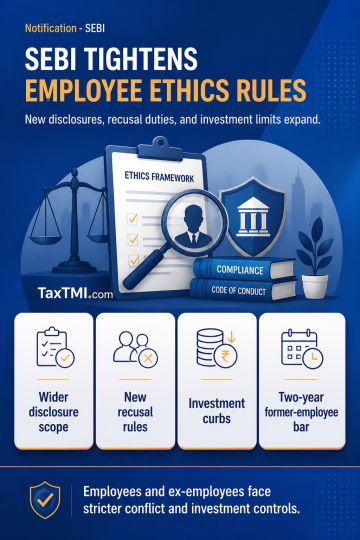
Employee conflict disclosures and investment restrictions expand with new recusal duties, post-employment limits, and compliance reporting requirement...
The HC held that even if an assessee commits an error, it can be examined u/s 264 of the Act, which has a wide scope. The revision authority cannot decline consideration merely because the assessee made a mistake. The HC found the reasons given for not entertaining the application u/s 264 unjustifiable. It held that the revision authority erred in rejecting the application without considering the applicable SRO values on the dates of agreement and registration, as claimed by the assessee. The HC allowed the writ petition, setting aside the impugned order and remanding the matter to the revision authority for fresh consideration in accordance with the law.
The HC held that even if an assessee commits an error, it can be examined u/s 264 of the Act, which has a wide scope. The revision authority cannot decline consideration merely because the assessee made a mistake. The HC found the reasons given for not entertaining the application u/s 264 unjustifiable. It held that the revision authority erred in rejecting the application without considering the applicable SRO values on the dates of agreement and registration, as claimed by the assessee. The HC allowed the writ petition, setting aside the impugned order and remanding the matter to the revision authority for fresh consideration in accordance with the law.
Note: It is a system-generated summary and is for quick reference only.
 TaxTMI
 of 4805


















 Join Channel


 TaxTMI