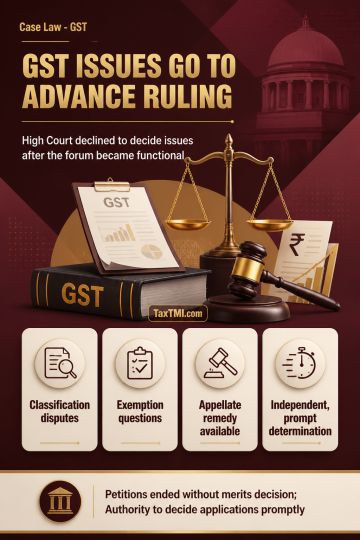
Advance-ruling mechanism governs pending GST classification, exemption and taxability disputes, limiting writ review once the specialised forum functi...
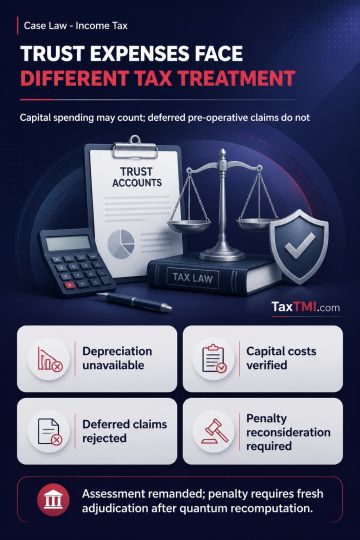
Charitable trust income application permits verified capital expenditure but rejects deferred pre-operative claims and requires reconsideration of con...
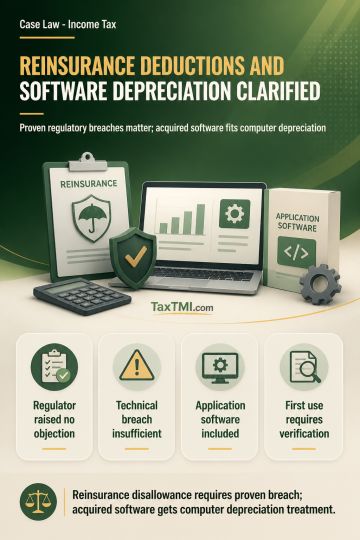
Reinsurance premium deductions require established regulatory breaches, while independently acquired software qualifies within the computer depreciati...
Page of 4796
Press 'Enter' after typing page number.
761 to 780 of 95918 Results
❮
❯
❯❯
0 / 200
Expand Note
Add to Folder
No Folders have been created
+
Are you sure you want to delete "My most important" ?
The NCLAT held that the date of default for invoking proceedings u/s 7 of the Insolvency and Bankruptcy Code (I&B Code) should be reckoned from 01.10.2012, when notices u/s 13(2) of SARFAESI Act were issued to the Corporate Debtor. The One-Time Settlement (OTS)/Compromise decree of 03.01.2020 cannot be considered the date of default, as default occurred when notices were issued and accepted by the Corporate Debtor in 2012. Since the application u/s 7 was filed on 19.07.2020, after the limitation period from the date of default in 2012, the NCLAT dismissed the appeal, holding the proceedings barred by limitation.
The NCLAT held that the date of default for invoking proceedings u/s 7 of the Insolvency and Bankruptcy Code (I&B Code) should be reckoned from 01.10.2012, when notices u/s 13(2) of SARFAESI Act were issued to the Corporate Debtor. The One-Time Settlement (OTS)/Compromise decree of 03.01.2020 cannot be considered the date of default, as default occurred when notices were issued and accepted by the Corporate Debtor in 2012. Since the application u/s 7 was filed on 19.07.2020, after the limitation period from the date of default in 2012, the NCLAT dismissed the appeal, holding the proceedings barred by limitation.
Note: It is a system-generated summary and is for quick reference only.
 TaxTMI
 of 4796



 Join Channel


 TaxTMI