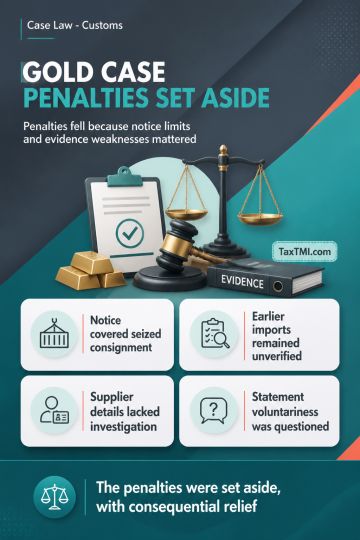
Arrest safeguards and transit remand requirements invalidated detention following inter-State transfer without communicated grounds or magistrate auth...
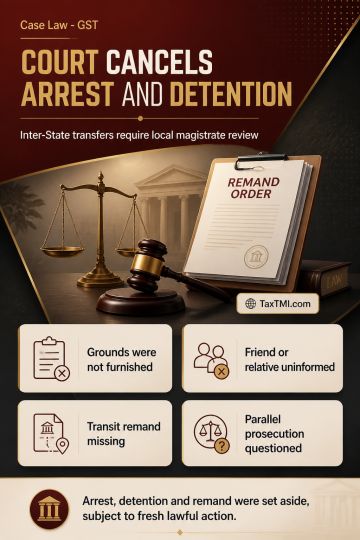
Arrest safeguards require disclosed grounds, relative intimation and transit remand, while duplicate prosecution under the CGST framework is unsustain...
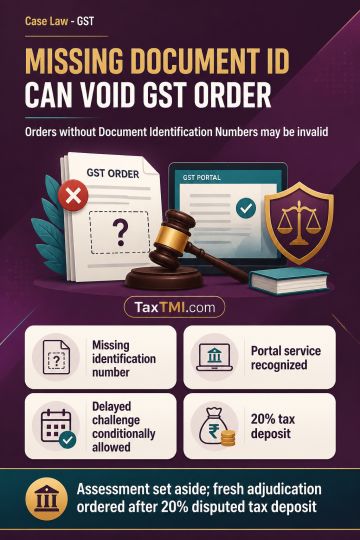
Document Identification Number defects can invalidate GST assessments, with delayed challenges entertained conditionally where patent irregularities e...
Windmill commissioning evidence supported higher depreciation where grid connection and electricity generation proved operational use before the relev...
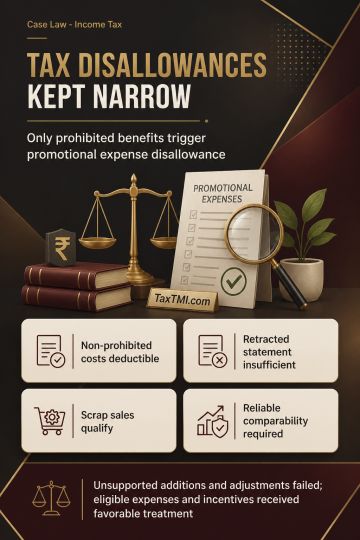
Pharmaceutical promotion and transfer-pricing comparability principles limited disallowances, while uncorroborated search allegations and unsupported ...
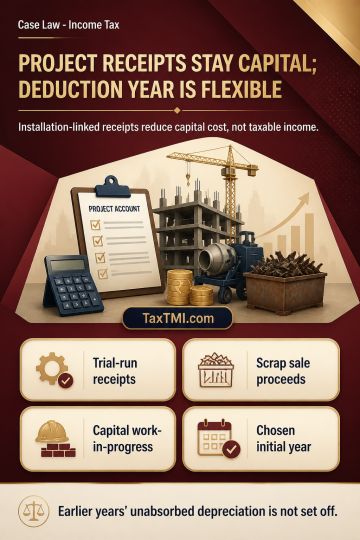
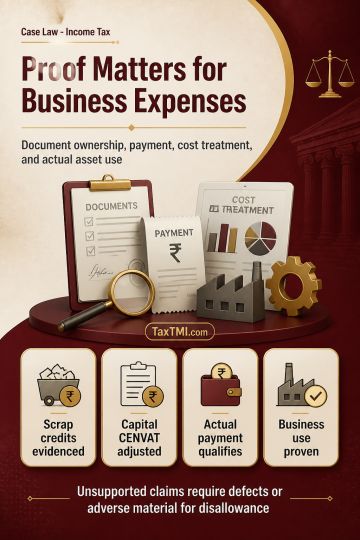
Business expenditure substantiation supports scrap credits, statutory payments and expense claims, while depreciation requires proof of actual busines...
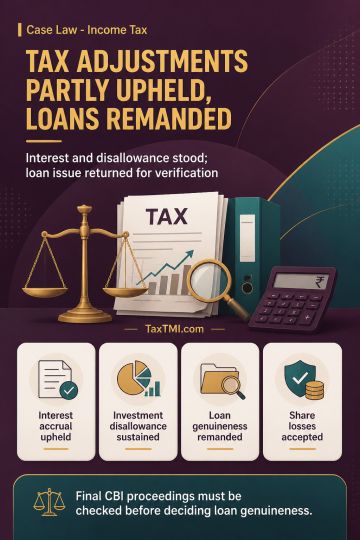
The ITAT allowed the assessee's appeal and held that the disallowance of interest expenditure claimed as a deduction against interest income from the partnership firm was not sustainable. The assessee had sourced funds from both interest-bearing loans and non-interest-bearing funds, which were majorly invested in the capital of partnership firms for business purposes. The revenue contended that since the investment did not earn any income except from one firm, the interest paid u/s 36(1)(iii) was not allowable. However, the ITAT observed that the commercial expediency must be considered for allowability u/s 36(1)(iii), and the revenue did not raise any contention in this regard. The ITAT noted that without establishing a one-to-one match, it cannot be said that the borrowed funds were used for giving interest-free loans and advances. As some loans extended were earning interest, the disallowance u/s 36(1)(iii) was not sustainable.
The ITAT allowed the assessee's appeal and held that the disallowance of interest expenditure claimed as a deduction against interest income from the partnership firm was not sustainable. The assessee had sourced funds from both interest-bearing loans and non-interest-bearing funds, which were majorly invested in the capital of partnership firms for business purposes. The revenue contended that since the investment did not earn any income except from one firm, the interest paid u/s 36(1)(iii) was not allowable. However, the ITAT observed that the commercial expediency must be considered for allowability u/s 36(1)(iii), and the revenue did not raise any contention in this regard. The ITAT noted that without establishing a one-to-one match, it cannot be said that the borrowed funds were used for giving interest-free loans and advances. As some loans extended were earning interest, the disallowance u/s 36(1)(iii) was not sustainable.
Note: It is a system-generated summary and is for quick reference only.
 TaxTMI
 of 4792









 Join Channel


 TaxTMI