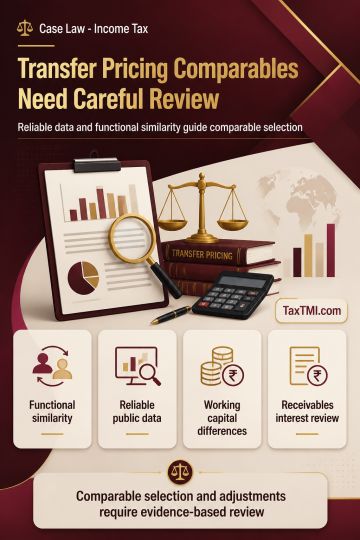
Transfer pricing comparability requires functional alignment, reliable financial data, and careful review of working capital and receivables adjustmen...
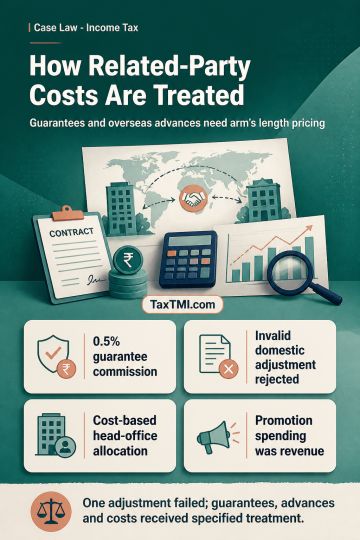
Transfer pricing rules require benchmarking corporate guarantees and associated-enterprise advances, while invalid domestic-transaction adjustments ca...
Prospective sugar export prohibition required registered letters of credit; private contracts and export quotas created no enforceable continuation ri...
Retroactive interim-moratorium exclusion permits protective asset disclosure and preservation measures against personal guarantors pending arbitration...
The ITAT allowed the assessee's appeal and held that the disallowance of interest expenditure claimed as a deduction against interest income from the partnership firm was not sustainable. The assessee had sourced funds from both interest-bearing loans and non-interest-bearing funds, which were majorly invested in the capital of partnership firms for business purposes. The revenue contended that since the investment did not earn any income except from one firm, the interest paid u/s 36(1)(iii) was not allowable. However, the ITAT observed that the commercial expediency must be considered for allowability u/s 36(1)(iii), and the revenue did not raise any contention in this regard. The ITAT noted that without establishing a one-to-one match, it cannot be said that the borrowed funds were used for giving interest-free loans and advances. As some loans extended were earning interest, the disallowance u/s 36(1)(iii) was not sustainable.
The ITAT allowed the assessee's appeal and held that the disallowance of interest expenditure claimed as a deduction against interest income from the partnership firm was not sustainable. The assessee had sourced funds from both interest-bearing loans and non-interest-bearing funds, which were majorly invested in the capital of partnership firms for business purposes. The revenue contended that since the investment did not earn any income except from one firm, the interest paid u/s 36(1)(iii) was not allowable. However, the ITAT observed that the commercial expediency must be considered for allowability u/s 36(1)(iii), and the revenue did not raise any contention in this regard. The ITAT noted that without establishing a one-to-one match, it cannot be said that the borrowed funds were used for giving interest-free loans and advances. As some loans extended were earning interest, the disallowance u/s 36(1)(iii) was not sustainable.
Note: It is a system-generated summary and is for quick reference only.
 TaxTMI
 of 4790













 Join Channel


 TaxTMI