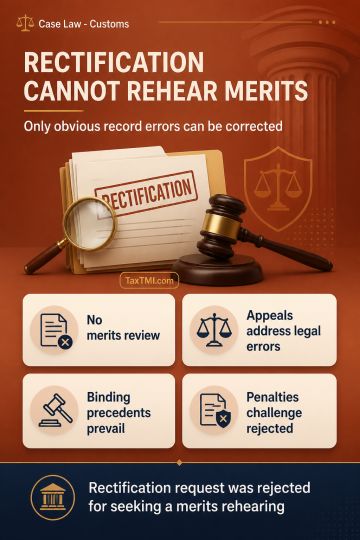
Rectification of mistake remains limited to self-evident record errors, preventing merits review through miscellaneous applications and preserving fin...
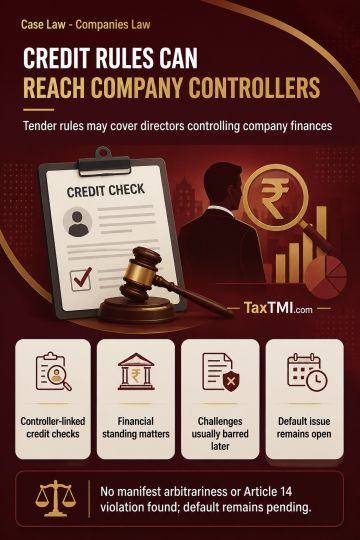
Tender creditworthiness conditions may extend to de facto Promoter Directors, with post-participation challenges generally barred absent arbitrariness...
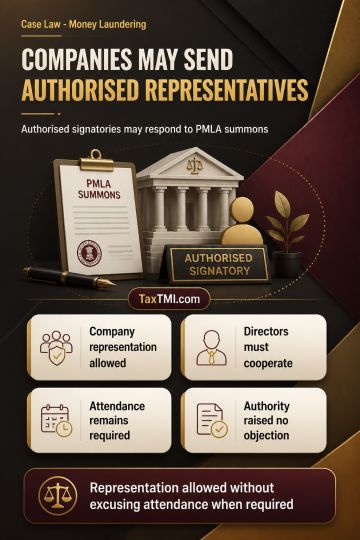
Corporate representation in PMLA summons proceedings permitted through an authorised signatory, subject to directors' continuing cooperation and atten...
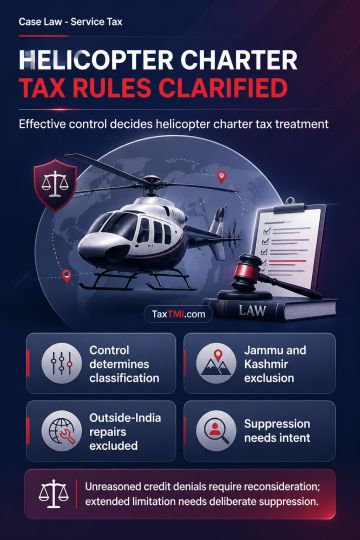
Helicopter charter classification requires effective control analysis, while territorial performance, reasoned credit orders and wilful suppression de...
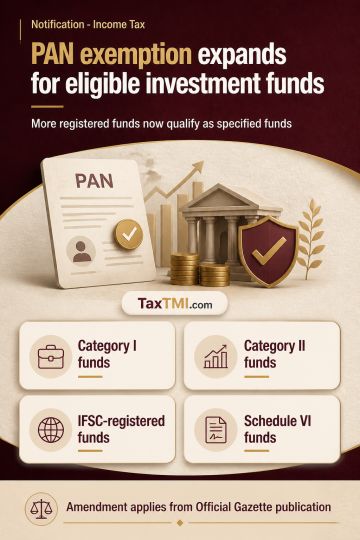
Specified fund definition expands PAN exemption eligibility for registered alternative investment funds and qualifying International Financial Service...
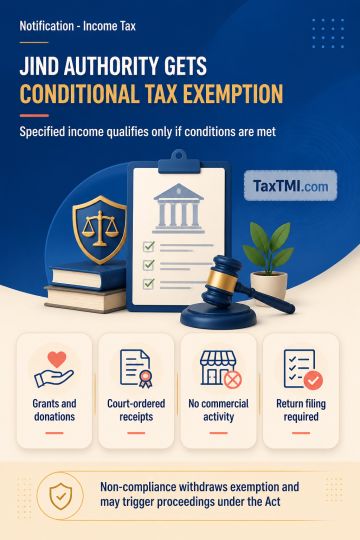
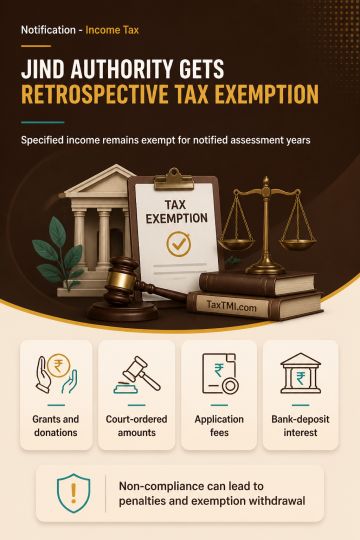
Tax exemption for specified legal-services authority income applies retrospectively, subject to non-commercial activity, unchanged income sources, and...
The Customs, Excise and Service Tax Appellate Tribunal (CESTAT) allowed the appeal and set aside the impugned order revoking the customs broker's license, forfeiting the security deposit, and imposing penalty. The Tribunal held that the alleged breaches of regulations 10(d), 10(e), 10(f), and 10(n) of the Customs Brokers Licensing Regulations, 2018, were not established. The allegations pertained to the export of overvalued goods to claim ineligible drawback, supported by fake bills from purported buyers instead of actual suppliers. However, the Tribunal ruled that the customs broker's actions before filing the shipping bill did not fall within the purview of the licensed activities. Additionally, there was no evidence of providing incorrect information leading to the exporter's breach or failure to verify the client's credentials as alleged.
The Customs, Excise and Service Tax Appellate Tribunal (CESTAT) allowed the appeal and set aside the impugned order revoking the customs broker's license, forfeiting the security deposit, and imposing penalty. The Tribunal held that the alleged breaches of regulations 10(d), 10(e), 10(f), and 10(n) of the Customs Brokers Licensing Regulations, 2018, were not established. The allegations pertained to the export of overvalued goods to claim ineligible drawback, supported by fake bills from purported buyers instead of actual suppliers. However, the Tribunal ruled that the customs broker's actions before filing the shipping bill did not fall within the purview of the licensed activities. Additionally, there was no evidence of providing incorrect information leading to the exporter's breach or failure to verify the client's credentials as alleged.
Note: It is a system-generated summary and is for quick reference only.
 TaxTMI
 of 4805



 Join Channel


 TaxTMI