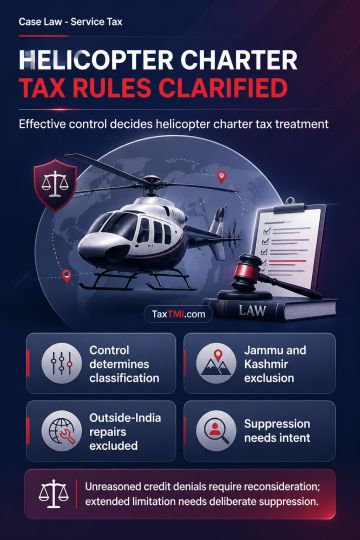
Helicopter charter classification requires effective control analysis, while territorial performance, reasoned credit orders and wilful suppression de...
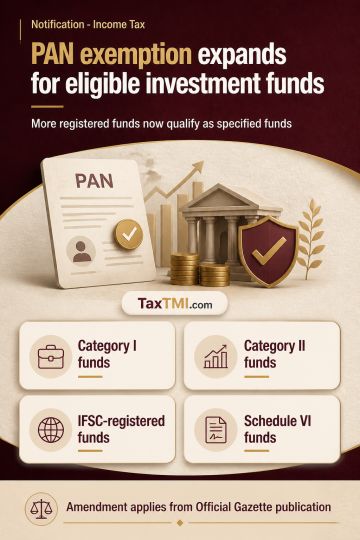
Specified fund definition expands PAN exemption eligibility for registered alternative investment funds and qualifying International Financial Service...
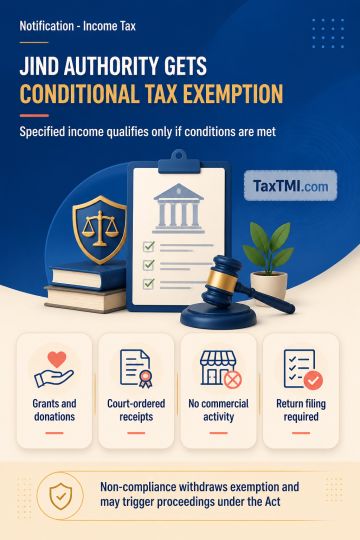
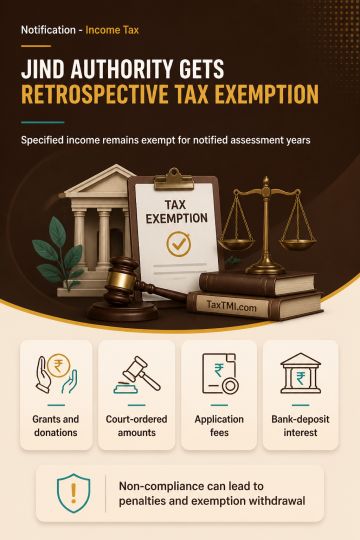
Tax exemption for specified legal-services authority income applies retrospectively, subject to non-commercial activity, unchanged income sources, and...
Approved resolution plans extinguish unsubmitted pre-approval tax claims, preventing later recovery outside the insolvency process and preserving a cl...
The Customs, Excise and Service Tax Appellate Tribunal (CESTAT) allowed the appeals by remanding the matter back to the original authority. The Tribunal held that the assessing officer's insistence on the importer conforming to the classification proposed by the investigating agency was inappropriate and contrary to the self-assessment procedure u/ss 17, 36, and 48 of the Customs Act, 1962. The Tribunal observed that enforced conformity was evident from the immediate challenge to the assessment by the importer. The Tribunal found the lack of a 'speaking order' as required u/s 17(5) of the Act vitiated the impugned orders with illegality. Consequently, the Tribunal set aside the orders and remanded the bills of entry to the original authority for compliance with the statutory procedure, particularly Section 17(5).
The Customs, Excise and Service Tax Appellate Tribunal (CESTAT) allowed the appeals by remanding the matter back to the original authority. The Tribunal held that the assessing officer's insistence on the importer conforming to the classification proposed by the investigating agency was inappropriate and contrary to the self-assessment procedure u/ss 17, 36, and 48 of the Customs Act, 1962. The Tribunal observed that enforced conformity was evident from the immediate challenge to the assessment by the importer. The Tribunal found the lack of a 'speaking order' as required u/s 17(5) of the Act vitiated the impugned orders with illegality. Consequently, the Tribunal set aside the orders and remanded the bills of entry to the original authority for compliance with the statutory procedure, particularly Section 17(5).
Note: It is a system-generated summary and is for quick reference only.
 TaxTMI
 of 4805




 Join Channel


 TaxTMI
