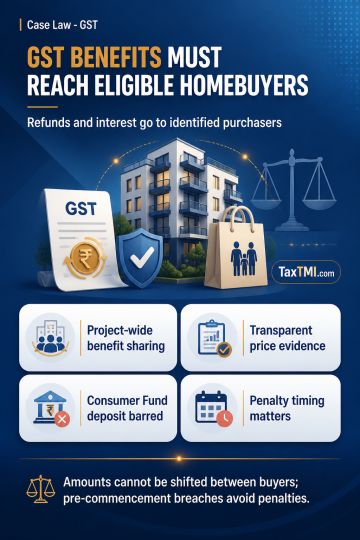
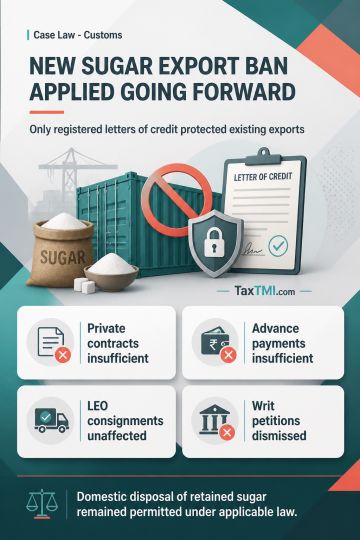
Prospective sugar export prohibition required registered letters of credit; private contracts and export quotas created no enforceable continuation ri...
Retroactive interim-moratorium exclusion permits protective asset disclosure and preservation measures against personal guarantors pending arbitration...
The Customs, Excise and Service Tax Appellate Tribunal (CESTAT) allowed the appeals by remanding the matter back to the original authority. The Tribunal held that the assessing officer's insistence on the importer conforming to the classification proposed by the investigating agency was inappropriate and contrary to the self-assessment procedure u/ss 17, 36, and 48 of the Customs Act, 1962. The Tribunal observed that enforced conformity was evident from the immediate challenge to the assessment by the importer. The Tribunal found the lack of a 'speaking order' as required u/s 17(5) of the Act vitiated the impugned orders with illegality. Consequently, the Tribunal set aside the orders and remanded the bills of entry to the original authority for compliance with the statutory procedure, particularly Section 17(5).
The Customs, Excise and Service Tax Appellate Tribunal (CESTAT) allowed the appeals by remanding the matter back to the original authority. The Tribunal held that the assessing officer's insistence on the importer conforming to the classification proposed by the investigating agency was inappropriate and contrary to the self-assessment procedure u/ss 17, 36, and 48 of the Customs Act, 1962. The Tribunal observed that enforced conformity was evident from the immediate challenge to the assessment by the importer. The Tribunal found the lack of a 'speaking order' as required u/s 17(5) of the Act vitiated the impugned orders with illegality. Consequently, the Tribunal set aside the orders and remanded the bills of entry to the original authority for compliance with the statutory procedure, particularly Section 17(5).
Note: It is a system-generated summary and is for quick reference only.
 TaxTMI
 of 4803



 Join Channel


 TaxTMI