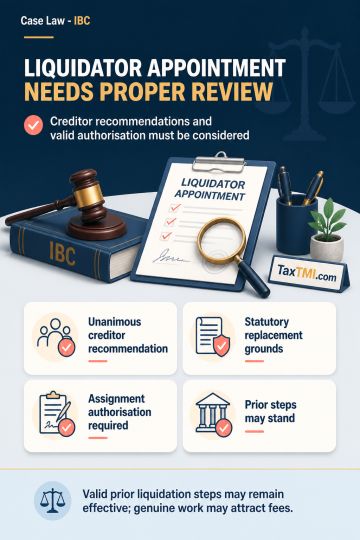
Liquidator appointment under Section 34 requires consideration of creditor recommendations, valid professional authorisation, and preservation of vali...
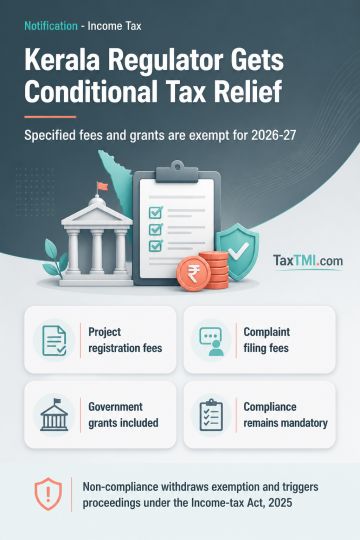
Income-tax exemption for specified regulatory fees and government grants applies subject to non-commercial activity and continuing compliance conditio...
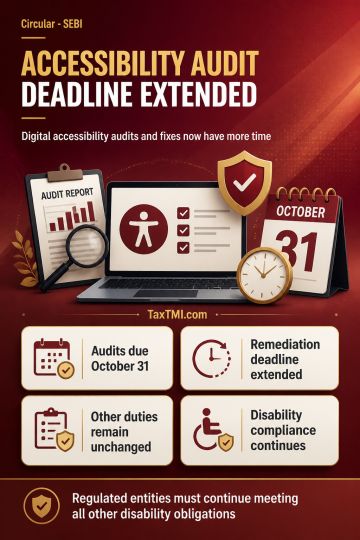
Digital accessibility audit and remediation deadlines extended, while all other disability-compliance obligations for regulated entities remain unchan...
The Customs, Excise and Service Tax Appellate Tribunal (CESTAT) set aside the impugned order and allowed the appeal. The Tribunal held that the imported goods, declared as 'penetrating oil' by the importer, were incorrectly reclassified as 'diesel oil' by the lower authorities based solely on the test reports indicating petroleum oil content above 70%. The Tribunal found flaws in the classification exercise and held that the test reports lacked clarity on the source and basic constituents of the oil. The Tribunal ruled that the goods were correctly declared, and the reclassification, re-determination of value, re-assessment of duty liability, and confiscation u/ss 111(d) and 111(m) of the Customs Act, 1962, were not in accordance with law.
The Customs, Excise and Service Tax Appellate Tribunal (CESTAT) set aside the impugned order and allowed the appeal. The Tribunal held that the imported goods, declared as 'penetrating oil' by the importer, were incorrectly reclassified as 'diesel oil' by the lower authorities based solely on the test reports indicating petroleum oil content above 70%. The Tribunal found flaws in the classification exercise and held that the test reports lacked clarity on the source and basic constituents of the oil. The Tribunal ruled that the goods were correctly declared, and the reclassification, re-determination of value, re-assessment of duty liability, and confiscation u/ss 111(d) and 111(m) of the Customs Act, 1962, were not in accordance with law.
Note: It is a system-generated summary and is for quick reference only.
 TaxTMI
 of 4801




 Join Channel


 TaxTMI