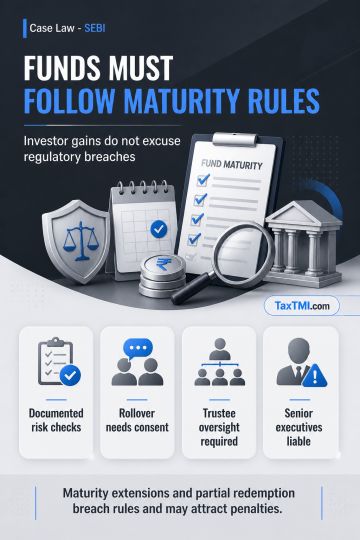
Mutual fund maturity rules require proper rollover, redemption, disclosure, and due diligence; investor gains cannot excuse regulatory breaches or pen...
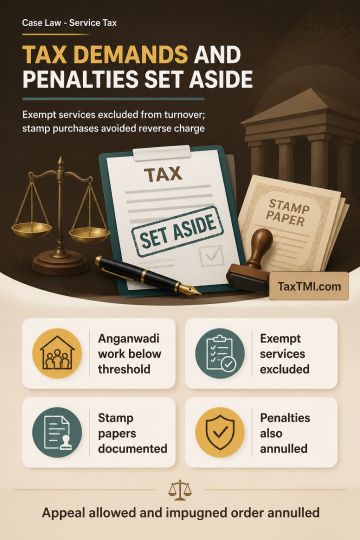
Threshold exemption excludes exempt services, while stamp-paper purchases avoid reverse charge; consequential service tax penalties were also set asid...
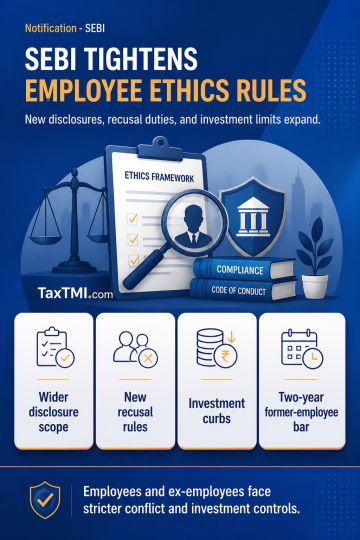
Employee conflict disclosures and investment restrictions expand with new recusal duties, post-employment limits, and compliance reporting requirement...
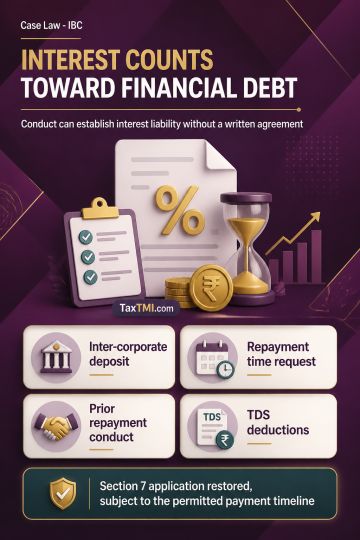
The appellant, a decree holder, qualifies as a "Financial Creditor" under the Insolvency and Bankruptcy Code (IBC). The settlement agreement recognized the appellant's financial claim, and the decree formalized the respondent's obligation to pay, not altering the underlying financial debt's character. The petition filed by the appellant u/s 7 of the IBC is within the limitation period. The respondent's acknowledgments of debt before the High Court extended the limitation period u/s 18 of the Limitation Act, 1963. The NCLT order dismissing the petition on the ground of limitation is erroneous and liable to be set aside. The appeal is allowed.
The appellant, a decree holder, qualifies as a "Financial Creditor" under the Insolvency and Bankruptcy Code (IBC). The settlement agreement recognized the appellant's financial claim, and the decree formalized the respondent's obligation to pay, not altering the underlying financial debt's character. The petition filed by the appellant u/s 7 of the IBC is within the limitation period. The respondent's acknowledgments of debt before the High Court extended the limitation period u/s 18 of the Limitation Act, 1963. The NCLT order dismissing the petition on the ground of limitation is erroneous and liable to be set aside. The appeal is allowed.
Note: It is a system-generated summary and is for quick reference only.
 TaxTMI
 of 4805







 Join Channel


 TaxTMI