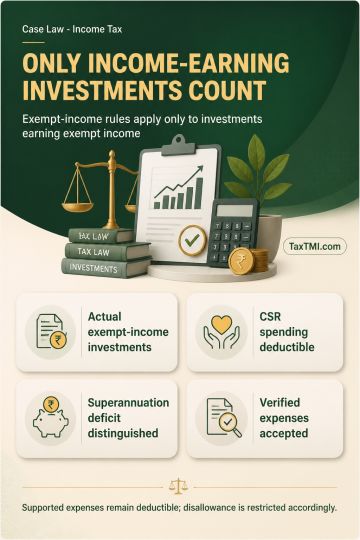
Exempt-income expenditure disallowance is confined to investments that actually generated exempt income, while supported business expenses remain dedu...
Objective characteristics and principal use govern mining-tyre classification, while fresh advance ruling applications may rely on additional technica...
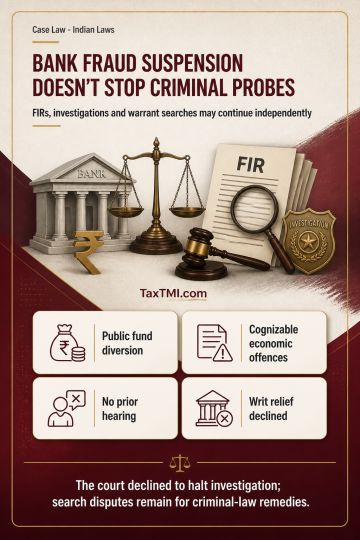
Administrative fraud classification suspension does not halt independent criminal investigation or warrant-based searches into alleged economic offenc...
The appellant, a decree holder, qualifies as a "Financial Creditor" under the Insolvency and Bankruptcy Code (IBC). The settlement agreement recognized the appellant's financial claim, and the decree formalized the respondent's obligation to pay, not altering the underlying financial debt's character. The petition filed by the appellant u/s 7 of the IBC is within the limitation period. The respondent's acknowledgments of debt before the High Court extended the limitation period u/s 18 of the Limitation Act, 1963. The NCLT order dismissing the petition on the ground of limitation is erroneous and liable to be set aside. The appeal is allowed.
The appellant, a decree holder, qualifies as a "Financial Creditor" under the Insolvency and Bankruptcy Code (IBC). The settlement agreement recognized the appellant's financial claim, and the decree formalized the respondent's obligation to pay, not altering the underlying financial debt's character. The petition filed by the appellant u/s 7 of the IBC is within the limitation period. The respondent's acknowledgments of debt before the High Court extended the limitation period u/s 18 of the Limitation Act, 1963. The NCLT order dismissing the petition on the ground of limitation is erroneous and liable to be set aside. The appeal is allowed.
Note: It is a system-generated summary and is for quick reference only.
 TaxTMI
 of 4800










 Join Channel


 TaxTMI