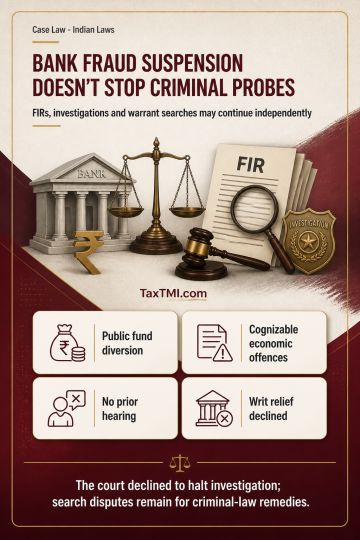
Administrative fraud classification suspension does not halt independent criminal investigation or warrant-based searches into alleged economic offenc...
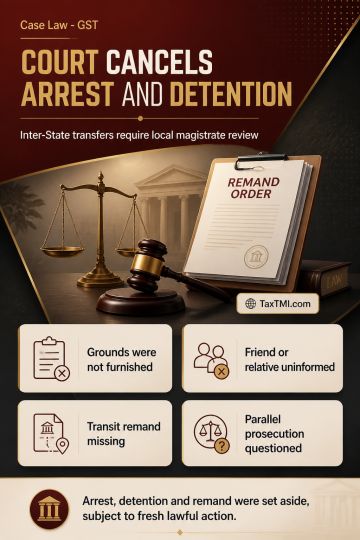
Arrest safeguards and transit remand requirements invalidated detention following inter-State transfer without communicated grounds or magistrate auth...
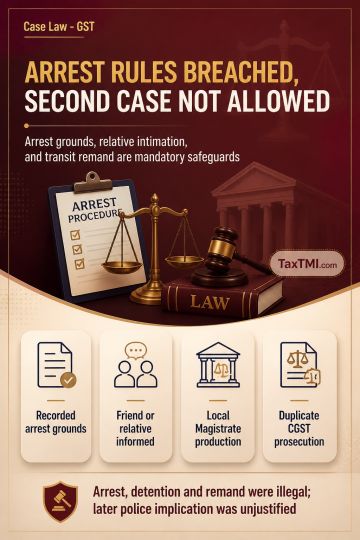
Arrest safeguards require disclosed grounds, relative intimation and transit remand, while duplicate prosecution under the CGST framework is unsustain...
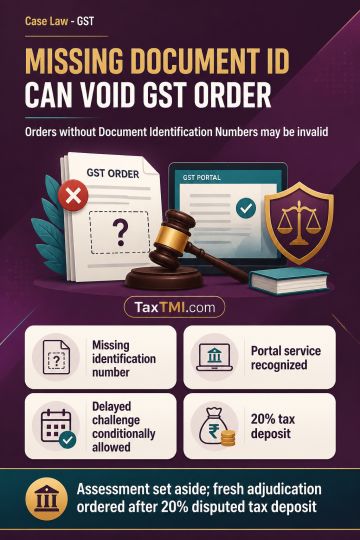
Document Identification Number defects can invalidate GST assessments, with delayed challenges entertained conditionally where patent irregularities e...
The High Court dismissed the writ petition challenging the show cause notice issued for wrongful availment of input tax credit by the petitioners. The Court held that the show cause notice u/s 74 of the CGST/WBGST Acts is merely initiation of adjudication and does not warrant judicial interference unless issued wholly without jurisdiction or ex-facie perverse. Relying on Supreme Court's decision in Mohd. Ghulam Ghouse case, the Court ruled that writ jurisdiction can be invoked only when the notice lacks jurisdiction, and interim relief cannot be granted bypassing the statutory adjudication mechanism. The Court found no jurisdictional error or procedural impropriety in issuing the notice and emphasized that procedural grievances can be effectively addressed during adjudication u/s 74(9). The statutory framework provides sufficient opportunity for taxpayers to raise defenses, and premature judicial intervention is impermissible.
The High Court dismissed the writ petition challenging the show cause notice issued for wrongful availment of input tax credit by the petitioners. The Court held that the show cause notice u/s 74 of the CGST/WBGST Acts is merely initiation of adjudication and does not warrant judicial interference unless issued wholly without jurisdiction or ex-facie perverse. Relying on Supreme Court's decision in Mohd. Ghulam Ghouse case, the Court ruled that writ jurisdiction can be invoked only when the notice lacks jurisdiction, and interim relief cannot be granted bypassing the statutory adjudication mechanism. The Court found no jurisdictional error or procedural impropriety in issuing the notice and emphasized that procedural grievances can be effectively addressed during adjudication u/s 74(9). The statutory framework provides sufficient opportunity for taxpayers to raise defenses, and premature judicial intervention is impermissible.
Note: It is a system-generated summary and is for quick reference only.
 TaxTMI
 of 4803







 Join Channel


 TaxTMI
