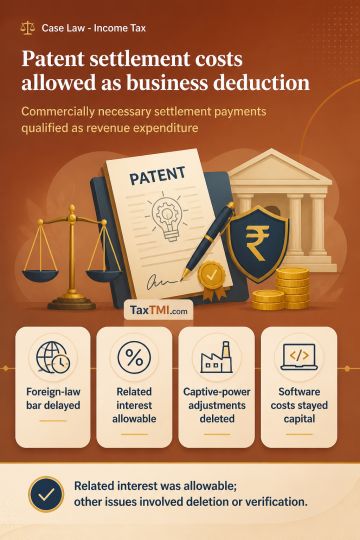
Patent-settlement expenditure treated as commercially expedient revenue outlay, with foreign-law restrictions inapplicable before the prospective amen...
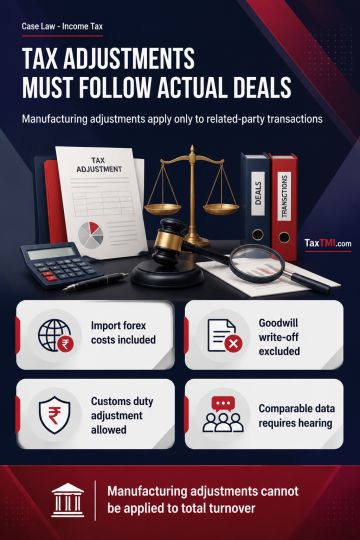
International transaction benchmarking restricts transfer pricing adjustments to associated-enterprise dealings, while functional comparability govern...
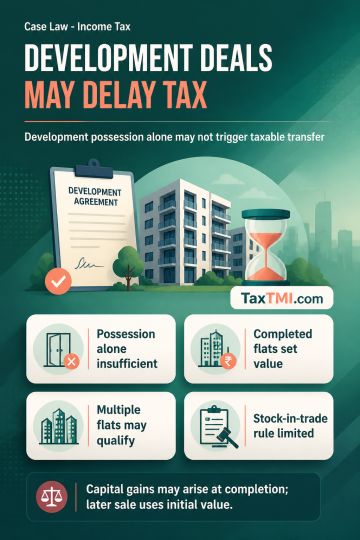
Joint development agreements defer taxable transfer where possession lacks part performance, while completed flats determine consideration and exempti...
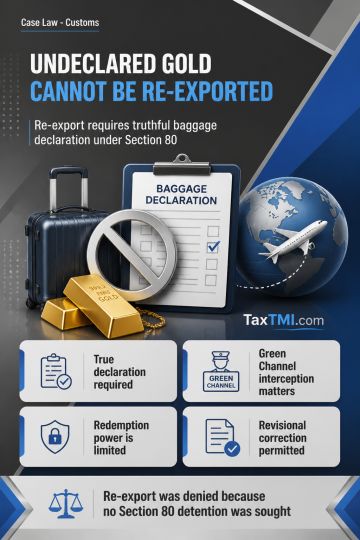
Passenger baggage re-export requires true declaration and cannot be granted indirectly through discretionary redemption of undeclared prohibited goods...
Page of 4803
Press 'Enter' after typing page number.
501 to 520 of 96046 Results
❮
❯
❯❯
0 / 200
Expand Note
Add to Folder
No Folders have been created
+
Are you sure you want to delete "My most important" ?
The High Court dismissed the writ petition challenging the show cause notice issued for wrongful availment of input tax credit by the petitioners. The Court held that the show cause notice u/s 74 of the CGST/WBGST Acts is merely initiation of adjudication and does not warrant judicial interference unless issued wholly without jurisdiction or ex-facie perverse. Relying on Supreme Court's decision in Mohd. Ghulam Ghouse case, the Court ruled that writ jurisdiction can be invoked only when the notice lacks jurisdiction, and interim relief cannot be granted bypassing the statutory adjudication mechanism. The Court found no jurisdictional error or procedural impropriety in issuing the notice and emphasized that procedural grievances can be effectively addressed during adjudication u/s 74(9). The statutory framework provides sufficient opportunity for taxpayers to raise defenses, and premature judicial intervention is impermissible.
The High Court dismissed the writ petition challenging the show cause notice issued for wrongful availment of input tax credit by the petitioners. The Court held that the show cause notice u/s 74 of the CGST/WBGST Acts is merely initiation of adjudication and does not warrant judicial interference unless issued wholly without jurisdiction or ex-facie perverse. Relying on Supreme Court's decision in Mohd. Ghulam Ghouse case, the Court ruled that writ jurisdiction can be invoked only when the notice lacks jurisdiction, and interim relief cannot be granted bypassing the statutory adjudication mechanism. The Court found no jurisdictional error or procedural impropriety in issuing the notice and emphasized that procedural grievances can be effectively addressed during adjudication u/s 74(9). The statutory framework provides sufficient opportunity for taxpayers to raise defenses, and premature judicial intervention is impermissible.
Note: It is a system-generated summary and is for quick reference only.
 TaxTMI
 of 4803






 Join Channel


 TaxTMI