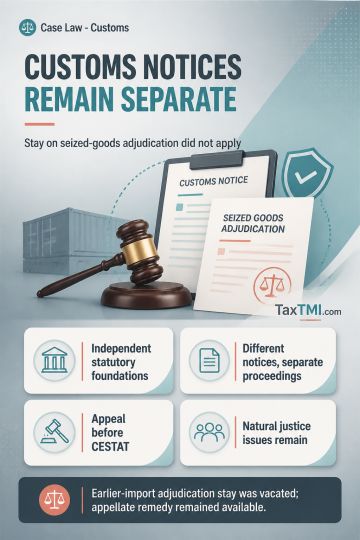
Independent show-cause notices remain separate proceedings, while customs adjudication challenges should ordinarily follow the statutory appellate rem...
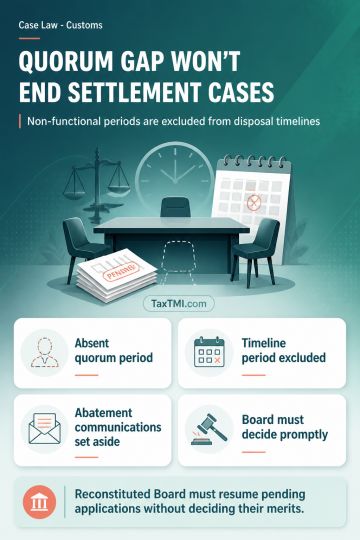
Institutional incapacity in customs settlement proceedings excludes non-functional quorum periods from statutory disposal timelines, preventing automa...
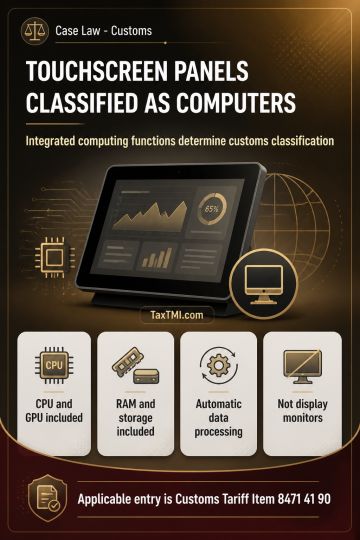
Interactive touchscreen panels with integrated computing functions fall under automatic data-processing machines rather than display monitors for cust...
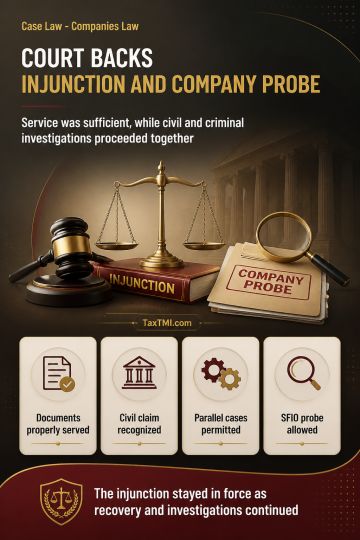
Ex parte injunction service requirements were substantially met, while civil recovery and SFIO investigation into provident fund defalcation continued...
The High Court dismissed the writ petition challenging the show cause notice issued for wrongful availment of input tax credit by the petitioners. The Court held that the show cause notice u/s 74 of the CGST/WBGST Acts is merely initiation of adjudication and does not warrant judicial interference unless issued wholly without jurisdiction or ex-facie perverse. Relying on Supreme Court's decision in Mohd. Ghulam Ghouse case, the Court ruled that writ jurisdiction can be invoked only when the notice lacks jurisdiction, and interim relief cannot be granted bypassing the statutory adjudication mechanism. The Court found no jurisdictional error or procedural impropriety in issuing the notice and emphasized that procedural grievances can be effectively addressed during adjudication u/s 74(9). The statutory framework provides sufficient opportunity for taxpayers to raise defenses, and premature judicial intervention is impermissible.
The High Court dismissed the writ petition challenging the show cause notice issued for wrongful availment of input tax credit by the petitioners. The Court held that the show cause notice u/s 74 of the CGST/WBGST Acts is merely initiation of adjudication and does not warrant judicial interference unless issued wholly without jurisdiction or ex-facie perverse. Relying on Supreme Court's decision in Mohd. Ghulam Ghouse case, the Court ruled that writ jurisdiction can be invoked only when the notice lacks jurisdiction, and interim relief cannot be granted bypassing the statutory adjudication mechanism. The Court found no jurisdictional error or procedural impropriety in issuing the notice and emphasized that procedural grievances can be effectively addressed during adjudication u/s 74(9). The statutory framework provides sufficient opportunity for taxpayers to raise defenses, and premature judicial intervention is impermissible.
Note: It is a system-generated summary and is for quick reference only.
 TaxTMI
 of 4801










 Join Channel


 TaxTMI