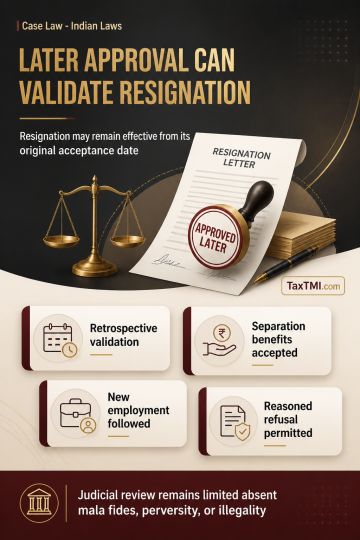
Ratification of resignation acceptance validates separation retrospectively, while withdrawal may be refused through reasoned administrative discretio...
Nature-dependent electricity contracts receive new Ind AS accounting, hedge designation, transition and financial-statement disclosure requirements fr...
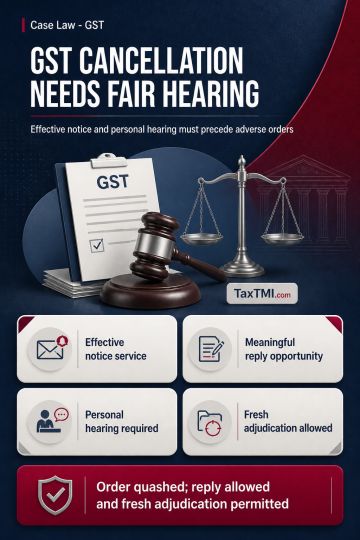
Alternative GST remedy permitted protective writ intervention for ex parte adjudication, preserving independent appellate review of input tax credit d...
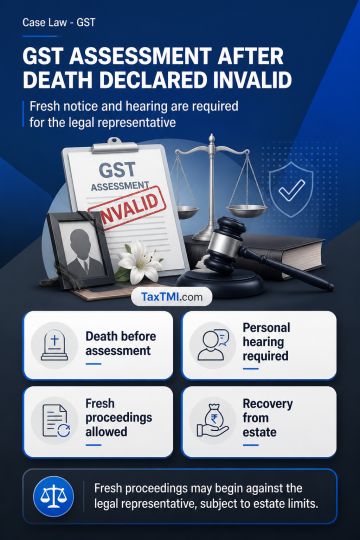
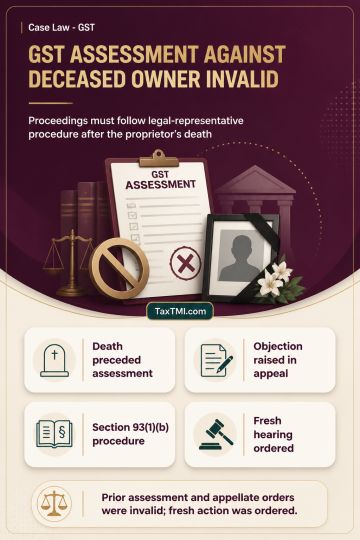
Assessment against deceased sole proprietor requires proceedings against the legal representative, rendering prior assessment and appellate orders inv...
Residential waste collection classification under SAC 999423 defeats composite-supply exemption where facilitating goods are not transferred to the lo...
Page of 4807
Press 'Enter' after typing page number.
301 to 320 of 96140 Results
❮
❯
❯❯
0 / 200
Expand Note
Add to Folder
No Folders have been created
+
Are you sure you want to delete "My most important" ?
The assessing officer (AO) is empowered u/s 275(1A) to revise the penalty order by giving a reasonable opportunity of hearing to the assessee within six months from the receipt of an appellate or revision order modifying the assessment. In the event the order passed by the Tribunal is modified by the High Court, the AO is required to give effect to the High Court's judgment by invoking Section 275(1A) and revise the penalty order accordingly. The CIT(A) correctly followed the Coordinate Bench decision and deleted the proportionate penalty levied by the AO to the extent of additions not confirmed by the Appellate Tribunal. The Revenue failed to demonstrate any stay order issued by the High Court against the Tribunal's order. Hence, the CIT(A)'s order confirming the penalty to the extent of additions confirmed by the Appellate Tribunal is upheld, and the Revenue's ground is dismissed.
The assessing officer (AO) is empowered u/s 275(1A) to revise the penalty order by giving a reasonable opportunity of hearing to the assessee within six months from the receipt of an appellate or revision order modifying the assessment. In the event the order passed by the Tribunal is modified by the High Court, the AO is required to give effect to the High Court's judgment by invoking Section 275(1A) and revise the penalty order accordingly. The CIT(A) correctly followed the Coordinate Bench decision and deleted the proportionate penalty levied by the AO to the extent of additions not confirmed by the Appellate Tribunal. The Revenue failed to demonstrate any stay order issued by the High Court against the Tribunal's order. Hence, the CIT(A)'s order confirming the penalty to the extent of additions confirmed by the Appellate Tribunal is upheld, and the Revenue's ground is dismissed.
Note: It is a system-generated summary and is for quick reference only.
 TaxTMI
  TaxTMI
 of 4807














 Join Channel