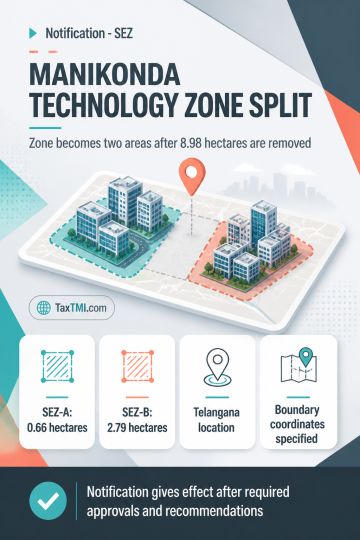
Transaction value cannot be rejected solely on non-statutory valuation guidelines without corroborative evidence supporting reassessment of final cust...
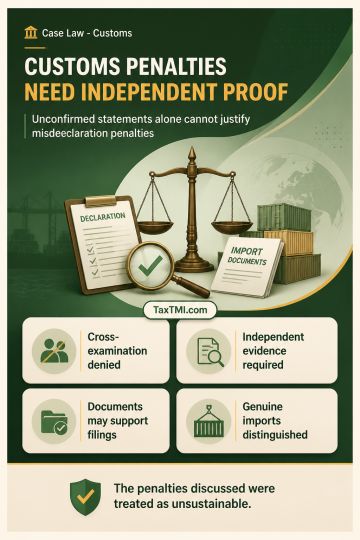
Cross-examination rights and corroborated evidence limit customs penalties for misdeclaration in genuine import transactions involving documented clea...
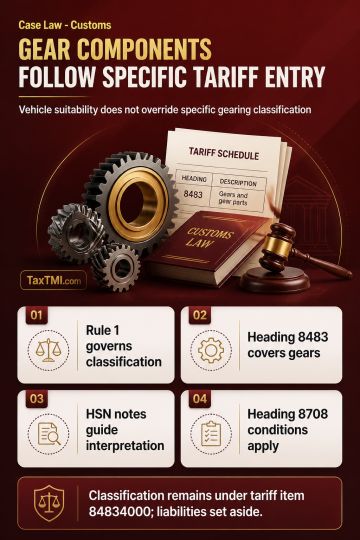
Tariff classification of vehicle gear components follows the specific gearing entry, displacing motor-vehicle parts classification and related liabili...
Necessary-party requirements limit impleadment of independent entities, while deferred consideration does not create an appealable adverse determinati...
Food supplement classification requires common parlance and authoritative tests, preventing treatment as proprietary Ayurvedic medicines without suppo...
The ITAT allowed the deduction u/s 10AA, restoring the assessee's claim. Despite the delay in filing Form 56F, a crucial certification by a Chartered Accountant attesting the correctness of the Section 10AA claim, the form was submitted before the issuance of the intimation u/s 143(1). The Tribunal held that procedural delays should not defeat substantive claims when the required documentation is available before assessment completion, considering the legislative intent to promote exports and economic activity in Special Economic Zones. The disallowance was unjustified as the delayed filing was a procedural lapse not affecting the claim's root. The deduction was restored without remand necessity.
The ITAT allowed the deduction u/s 10AA, restoring the assessee's claim. Despite the delay in filing Form 56F, a crucial certification by a Chartered Accountant attesting the correctness of the Section 10AA claim, the form was submitted before the issuance of the intimation u/s 143(1). The Tribunal held that procedural delays should not defeat substantive claims when the required documentation is available before assessment completion, considering the legislative intent to promote exports and economic activity in Special Economic Zones. The disallowance was unjustified as the delayed filing was a procedural lapse not affecting the claim's root. The deduction was restored without remand necessity.
Note: It is a system-generated summary and is for quick reference only.
 TaxTMI
  TaxTMI
 of 4814


















 Join Channel