Clean slate principle extinguishes uncrystallised operational claims and bars continuation of pending recovery and arbitral proceedings after plan app...
Works contract classification governs composite layout-development contracts where VAT-paid goods are transferred alongside construction and infrastru...
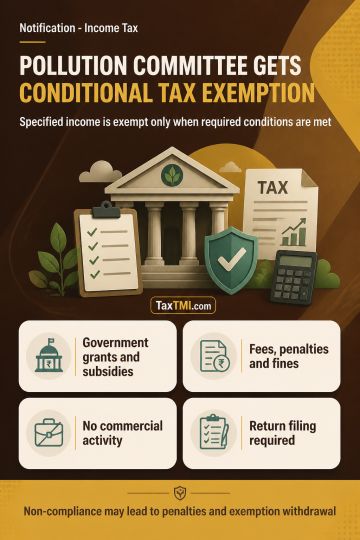
Specified income tax exemption for pollution control body remains conditional on non-commercial activity, unchanged income character, and return filin...
Jurisdictional facts in certificate-of-origin discrepancies can support customs show-cause proceedings, leaving factual explanations for departmental ...
The High Court held that while exercising jurisdiction under Article 226 of the Constitution, it does not assume the role of an appellate authority to conduct a merit review of orders passed by the Income Tax Settlement Commission. Its role is confined to judicial review by applying well-settled principles. The Court would be concerned with the decision-making process adopted by the Commission, not the decision itself. The scope of inquiry is limited to whether the Commission's order complies with statutory provisions of Chapter XIX-A of the Income Tax Act. The Court cannot decide on facts or interpretation of documents. A defect vitiating a settlement must vitiate the whole, not merely a part. A settlement partakes the nature of a negotiated contract with a "give and take." The settlement must fail or succeed as a whole, as partial acceptance is not envisaged under the Income Tax Act. The Court must defer to the statutory finality envisaged for settlement while exercising judicial review. The Writ Appeal was dismissed.
The High Court held that while exercising jurisdiction under Article 226 of the Constitution, it does not assume the role of an appellate authority to conduct a merit review of orders passed by the Income Tax Settlement Commission. Its role is confined to judicial review by applying well-settled principles. The Court would be concerned with the decision-making process adopted by the Commission, not the decision itself. The scope of inquiry is limited to whether the Commission's order complies with statutory provisions of Chapter XIX-A of the Income Tax Act. The Court cannot decide on facts or interpretation of documents. A defect vitiating a settlement must vitiate the whole, not merely a part. A settlement partakes the nature of a negotiated contract with a "give and take." The settlement must fail or succeed as a whole, as partial acceptance is not envisaged under the Income Tax Act. The Court must defer to the statutory finality envisaged for settlement while exercising judicial review. The Writ Appeal was dismissed.
Note: It is a system-generated summary and is for quick reference only.
 TaxTMI
  TaxTMI
 of 4817










 Join Channel