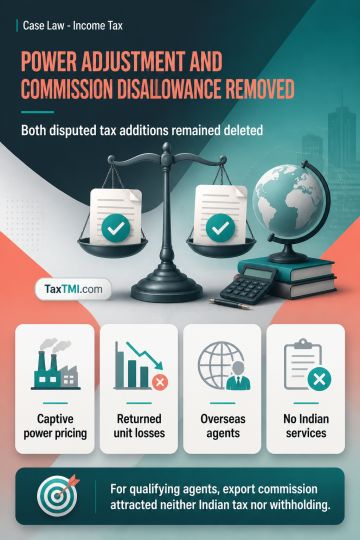
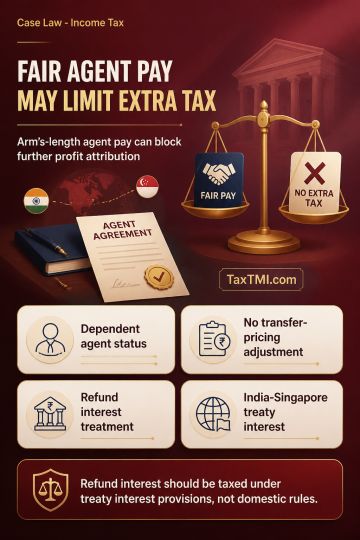
Captive power transfer pricing and non-resident export commission rules support deletion of adjustments and withholding disallowance in discussed proc...
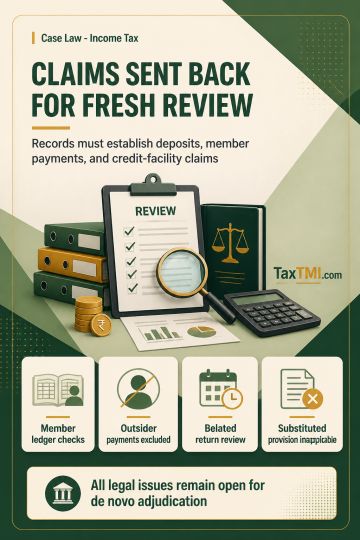
Cooperative society deposits, member-interest TDS exemption and credit-facility deduction claims require verification through records and supporting e...
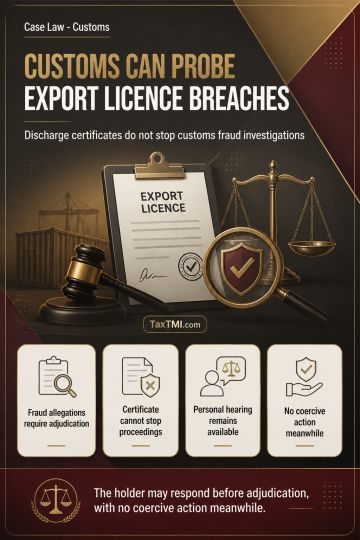
Customs jurisdiction over EPCG condition breaches survives export-obligation discharge certificates, requiring alleged fraud and misdeclaration to be ...
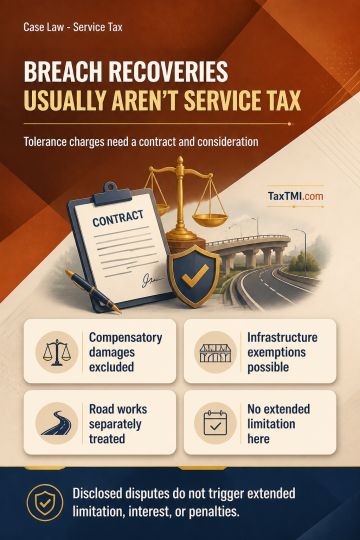
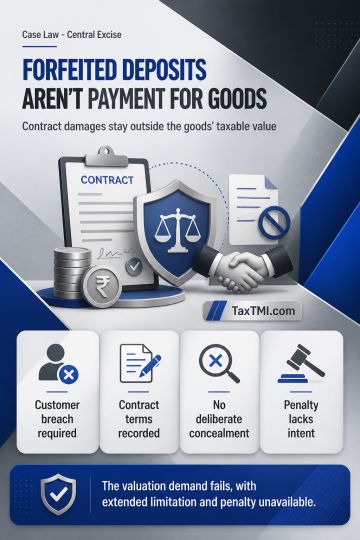
Contractual tolerance requires consideration; breach recoveries, qualifying public infrastructure services and road works escape service tax liability...
The Income Tax Appellate Tribunal (ITAT) held that the assessee's transactions involving purchases and sales on a High Seas Sales (HSS) basis did not constitute speculative transactions. The ITAT observed that under the Act, the term "speculation" focuses on whether the transactions involve actual delivery, transfer, or settlement. In the assessee's case, the entire transaction involved a process where delivery of goods took place, evidenced by documents like the Bill of Lading, which was not disputed by the revenue authorities. The ITAT found that the assessee physically purchased goods from a foreign seller, sold them to an importer while on high seas, and the ultimate buyer took delivery by filing the bill of entry and complying with customs formalities. Since the factual sequence of events and documentary evidence regarding the ultimate delivery were not disputed, the ITAT concluded that the transactions did not amount to speculation. Consequently, the assessee's appeal was allowed.
The Income Tax Appellate Tribunal (ITAT) held that the assessee's transactions involving purchases and sales on a High Seas Sales (HSS) basis did not constitute speculative transactions. The ITAT observed that under the Act, the term "speculation" focuses on whether the transactions involve actual delivery, transfer, or settlement. In the assessee's case, the entire transaction involved a process where delivery of goods took place, evidenced by documents like the Bill of Lading, which was not disputed by the revenue authorities. The ITAT found that the assessee physically purchased goods from a foreign seller, sold them to an importer while on high seas, and the ultimate buyer took delivery by filing the bill of entry and complying with customs formalities. Since the factual sequence of events and documentary evidence regarding the ultimate delivery were not disputed, the ITAT concluded that the transactions did not amount to speculation. Consequently, the assessee's appeal was allowed.
Note: It is a system-generated summary and is for quick reference only.
 TaxTMI
  TaxTMI
 of 4813






 Join Channel