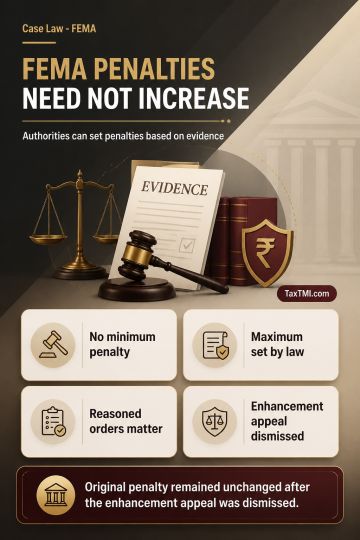
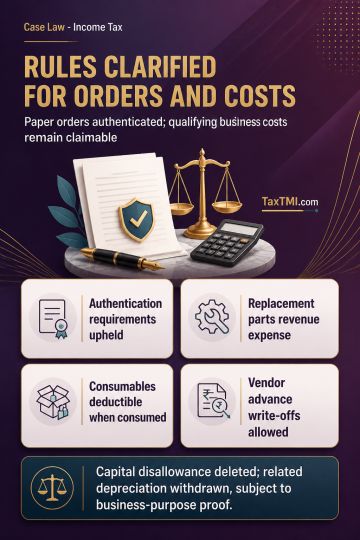
Authentication of paper assessment orders upheld, while qualifying repairs, consumables and vendor advance write-offs remain deductible business claim...
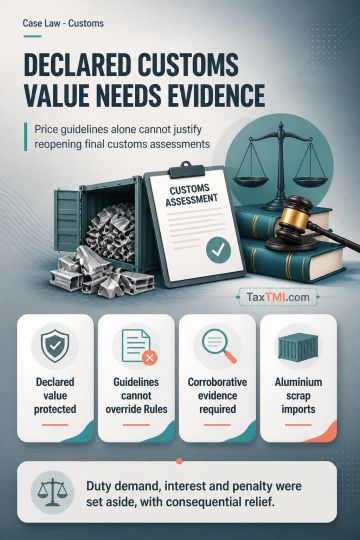
Transaction value cannot be rejected solely on non-statutory valuation guidelines without corroborative evidence supporting reassessment of final cust...
Cross-examination rights and corroborated evidence limit customs penalties for misdeclaration in genuine import transactions involving documented clea...
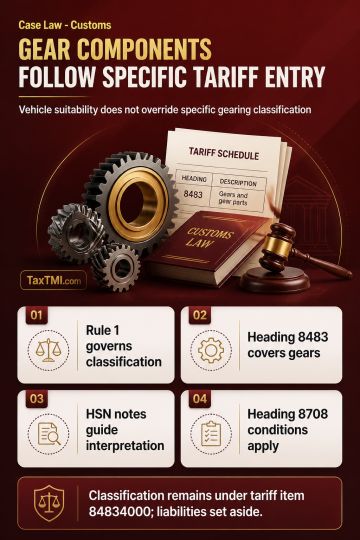
Tariff classification of vehicle gear components follows the specific gearing entry, displacing motor-vehicle parts classification and related liabili...
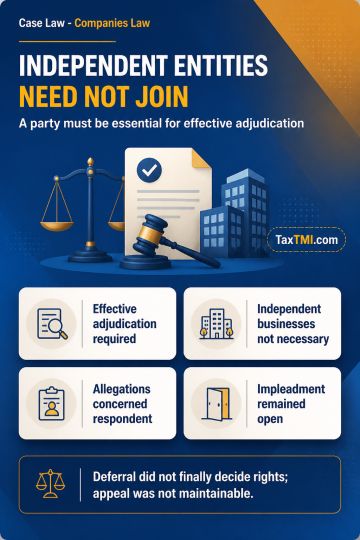
Necessary-party requirements limit impleadment of independent entities, while deferred consideration does not create an appealable adverse determinati...
The Income Tax Appellate Tribunal (ITAT) held that the assessee's transactions involving purchases and sales on a High Seas Sales (HSS) basis did not constitute speculative transactions. The ITAT observed that under the Act, the term "speculation" focuses on whether the transactions involve actual delivery, transfer, or settlement. In the assessee's case, the entire transaction involved a process where delivery of goods took place, evidenced by documents like the Bill of Lading, which was not disputed by the revenue authorities. The ITAT found that the assessee physically purchased goods from a foreign seller, sold them to an importer while on high seas, and the ultimate buyer took delivery by filing the bill of entry and complying with customs formalities. Since the factual sequence of events and documentary evidence regarding the ultimate delivery were not disputed, the ITAT concluded that the transactions did not amount to speculation. Consequently, the assessee's appeal was allowed.
The Income Tax Appellate Tribunal (ITAT) held that the assessee's transactions involving purchases and sales on a High Seas Sales (HSS) basis did not constitute speculative transactions. The ITAT observed that under the Act, the term "speculation" focuses on whether the transactions involve actual delivery, transfer, or settlement. In the assessee's case, the entire transaction involved a process where delivery of goods took place, evidenced by documents like the Bill of Lading, which was not disputed by the revenue authorities. The ITAT found that the assessee physically purchased goods from a foreign seller, sold them to an importer while on high seas, and the ultimate buyer took delivery by filing the bill of entry and complying with customs formalities. Since the factual sequence of events and documentary evidence regarding the ultimate delivery were not disputed, the ITAT concluded that the transactions did not amount to speculation. Consequently, the assessee's appeal was allowed.
Note: It is a system-generated summary and is for quick reference only.
 TaxTMI
  TaxTMI
 of 4811





 Join Channel