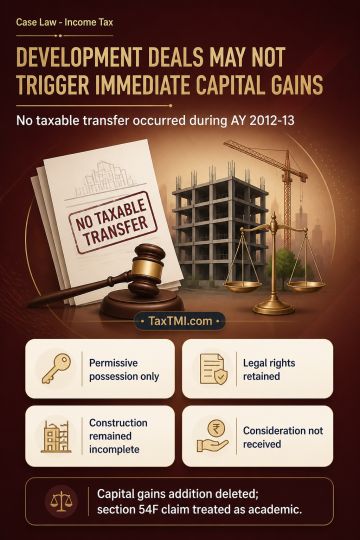
Development agreements require legal possession or effective enjoyment for capital gains transfer; permissive possession and deferred consideration de...
Prolonged sterilisation of development rights supports capital-gains treatment, while business-income disallowances cannot govern capital-gains comput...
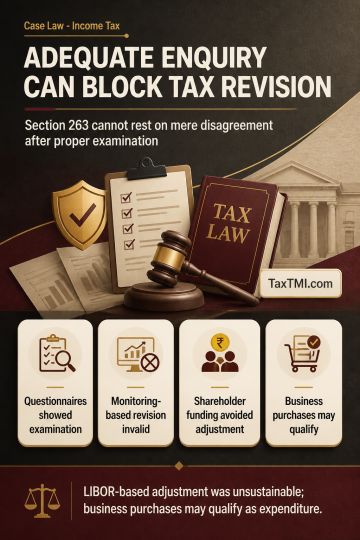
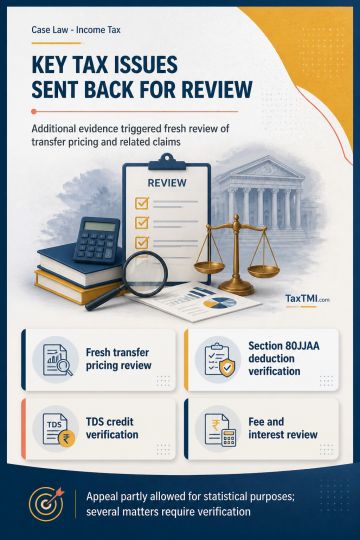
Additional evidence in transfer pricing dispute leads to fresh examination, while tax deductions, TDS credit, fee and refund interest require verifica...
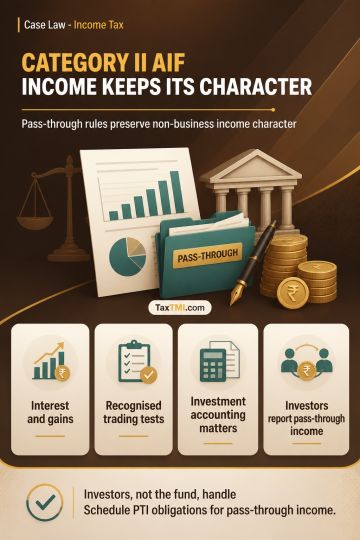
Category II AIF pass-through taxation preserves non-business income character; investment receipts cannot be reclassified without applying recognised ...
The CESTAT held that the demand of Rs.80,61,111/- (including Education Cess and Secondary and Higher Education Cess) raised on the ground of difference between the taxable value recorded in Service Tax returns and the income shown in the Balance Sheet and Profit & Loss Account is not sustainable. The appellant had not suppressed any information from the Department, and there was no mala fide intent or intention to evade payment of tax established. Invoking the extended period of limitation was not justified as per the Supreme Court's judgment in Nirlon Ltd. case. The entire demand of Service Tax for the financial years 2007-08 to 2010-11 was set aside on the ground of limitation. The demand of Rs.46,931/- on advances received from customers was also set aside as these were refundable security deposits not liable to Service Tax. However, the appellant was eligible to avail the CENVAT Credit of Rs.69,73,243/- as the input invoices met the requirements under the CENVAT Credit Rules. Consequently, the penalties imposed u/s 78 of the Finance Act and Rule 15(2) of the CENVAT Credit Rules were also set aside.
The CESTAT held that the demand of Rs.80,61,111/- (including Education Cess and Secondary and Higher Education Cess) raised on the ground of difference between the taxable value recorded in Service Tax returns and the income shown in the Balance Sheet and Profit & Loss Account is not sustainable. The appellant had not suppressed any information from the Department, and there was no mala fide intent or intention to evade payment of tax established. Invoking the extended period of limitation was not justified as per the Supreme Court's judgment in Nirlon Ltd. case. The entire demand of Service Tax for the financial years 2007-08 to 2010-11 was set aside on the ground of limitation. The demand of Rs.46,931/- on advances received from customers was also set aside as these were refundable security deposits not liable to Service Tax. However, the appellant was eligible to avail the CENVAT Credit of Rs.69,73,243/- as the input invoices met the requirements under the CENVAT Credit Rules. Consequently, the penalties imposed u/s 78 of the Finance Act and Rule 15(2) of the CENVAT Credit Rules were also set aside.
Note: It is a system-generated summary and is for quick reference only.
 TaxTMI
  TaxTMI
 of 4816






 Join Channel