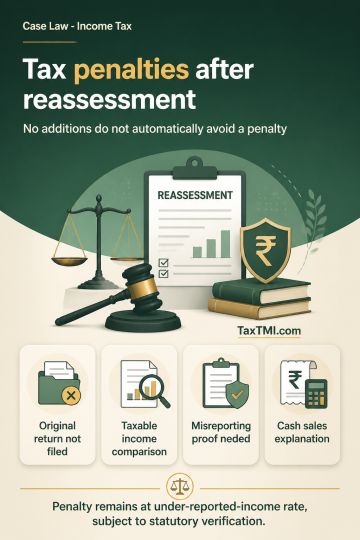
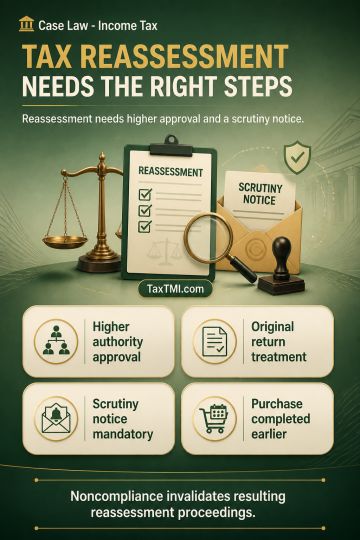
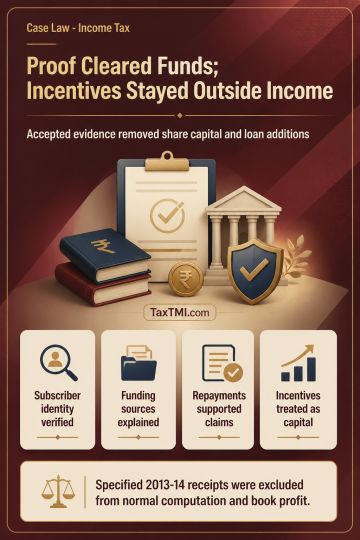
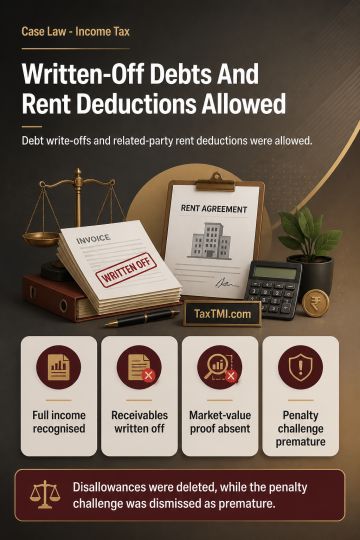
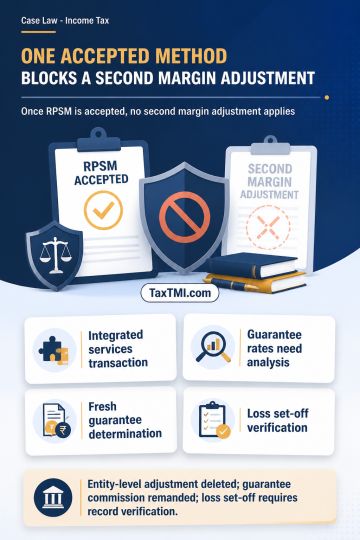
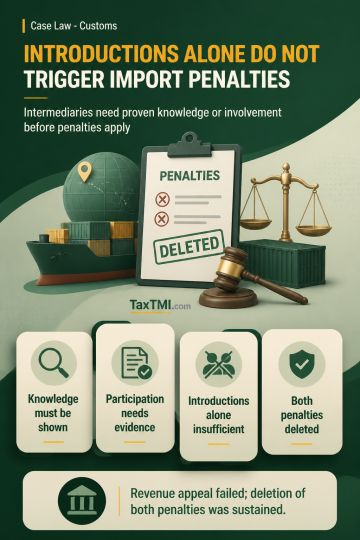
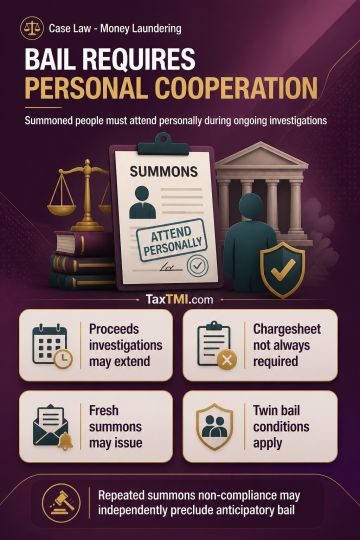
Under-reporting on a first reassessment return attracts penalty, while enhanced misreporting penalty requires proof of a statutory misreporting catego...
Form 26AS evidence requires successor-entity accounting verification after business transfer, while invoice-supported related-party advertising expend...
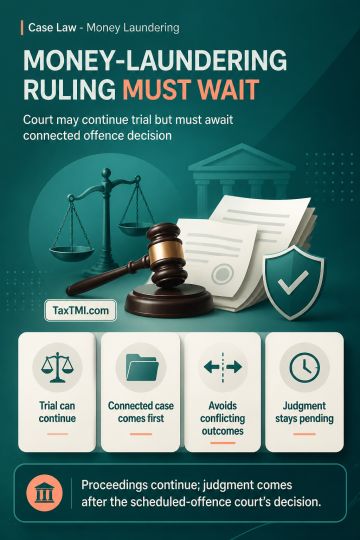
Money-laundering judgment timing requires awaiting the scheduled-offence decision despite continuation of the underlying trial where outcomes directly...
Page of 4921
Press 'Enter' after typing page number.
141 to 160 of 98411 Results
❮
❯
❯❯
0 / 200
Expand Note
Add to Folder
No Folders have been created
+
Are you sure you want to delete "My most important" ?
The Income Tax Appellate Tribunal held that the payments received by the assessee, a foreign resident without a permanent establishment in India, for providing offshore services vessels on hire were business receipts not taxable in India under the applicable Double Taxation Avoidance Agreement. The Tribunal rejected the tax authorities' reliance on Section 44BB of the Income Tax Act and the assessee's prior application for a lower withholding tax certificate, stating that the taxability of such receipts cannot be determined based solely on these factors. The Tribunal emphasized that the assessee's income cannot be taxed in India merely because it sought a lower withholding tax certificate, as determination of tax liability must be based on legal provisions, not unilateral concessions.
The Income Tax Appellate Tribunal held that the payments received by the assessee, a foreign resident without a permanent establishment in India, for providing offshore services vessels on hire were business receipts not taxable in India under the applicable Double Taxation Avoidance Agreement. The Tribunal rejected the tax authorities' reliance on Section 44BB of the Income Tax Act and the assessee's prior application for a lower withholding tax certificate, stating that the taxability of such receipts cannot be determined based solely on these factors. The Tribunal emphasized that the assessee's income cannot be taxed in India merely because it sought a lower withholding tax certificate, as determination of tax liability must be based on legal provisions, not unilateral concessions.
Note: It is a system-generated summary and is for quick reference only.
 TaxTMI
  TaxTMI
 of 4921