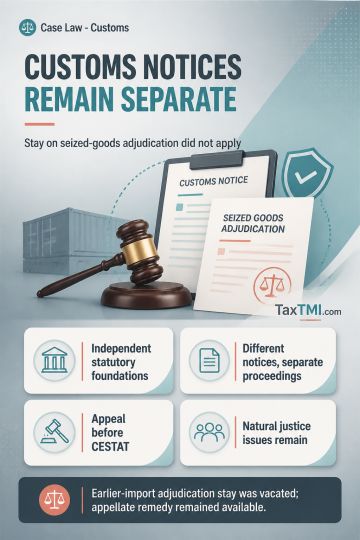
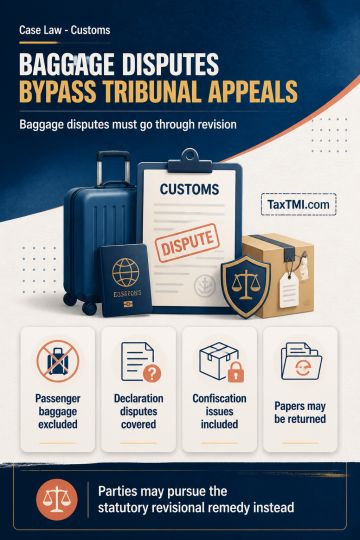
Independent show-cause notices remain separate proceedings, while customs adjudication challenges should ordinarily follow the statutory appellate rem...
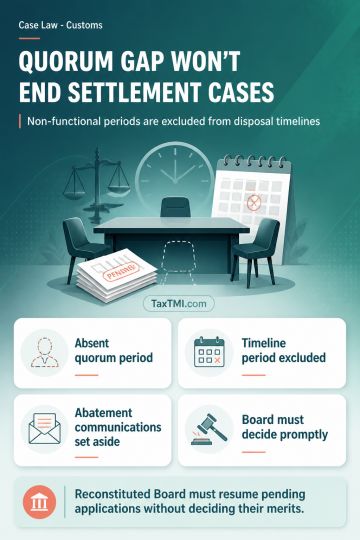
Institutional incapacity in customs settlement proceedings excludes non-functional quorum periods from statutory disposal timelines, preventing automa...
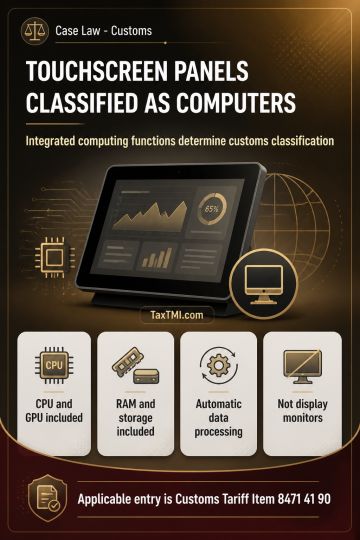
Interactive touchscreen panels with integrated computing functions fall under automatic data-processing machines rather than display monitors for cust...
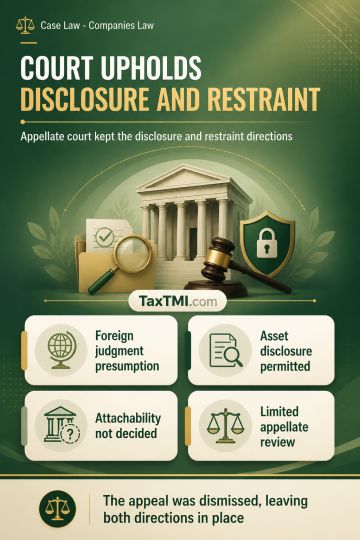
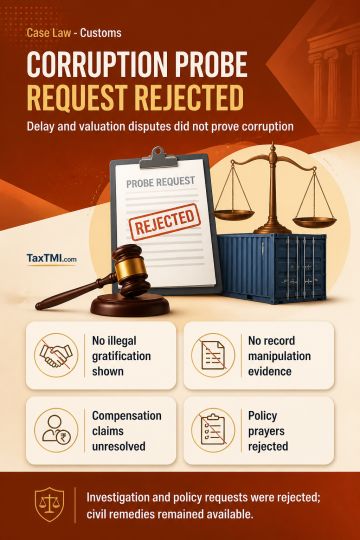
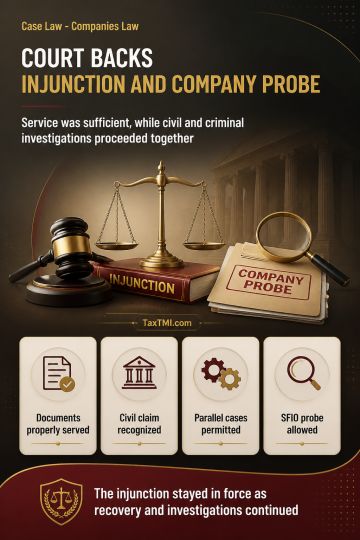
Ex parte injunction service requirements were substantially met, while civil recovery and SFIO investigation into provident fund defalcation continued...
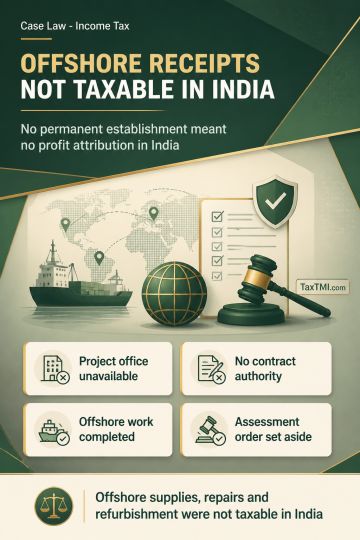
The Income Tax Appellate Tribunal held that the payments received by the assessee, a foreign resident without a permanent establishment in India, for providing offshore services vessels on hire were business receipts not taxable in India under the applicable Double Taxation Avoidance Agreement. The Tribunal rejected the tax authorities' reliance on Section 44BB of the Income Tax Act and the assessee's prior application for a lower withholding tax certificate, stating that the taxability of such receipts cannot be determined based solely on these factors. The Tribunal emphasized that the assessee's income cannot be taxed in India merely because it sought a lower withholding tax certificate, as determination of tax liability must be based on legal provisions, not unilateral concessions.
The Income Tax Appellate Tribunal held that the payments received by the assessee, a foreign resident without a permanent establishment in India, for providing offshore services vessels on hire were business receipts not taxable in India under the applicable Double Taxation Avoidance Agreement. The Tribunal rejected the tax authorities' reliance on Section 44BB of the Income Tax Act and the assessee's prior application for a lower withholding tax certificate, stating that the taxability of such receipts cannot be determined based solely on these factors. The Tribunal emphasized that the assessee's income cannot be taxed in India merely because it sought a lower withholding tax certificate, as determination of tax liability must be based on legal provisions, not unilateral concessions.
Note: It is a system-generated summary and is for quick reference only.
 TaxTMI
 of 4801



 Join Channel


 TaxTMI